
Most photography enthusiasts struggle to understand the foundational techniques that can elevate their images from ordinary to stunning. In this guide, you will explore masterful how-to techniques that will enhance your photography skills, from mastering light and composition to selecting the right equipment. As you probe into these basics, you’ll find practical tips and insights that empower you to create captivating photographs no matter your experience level. Get ready to unlock your creative potential and transform your approach to photography!
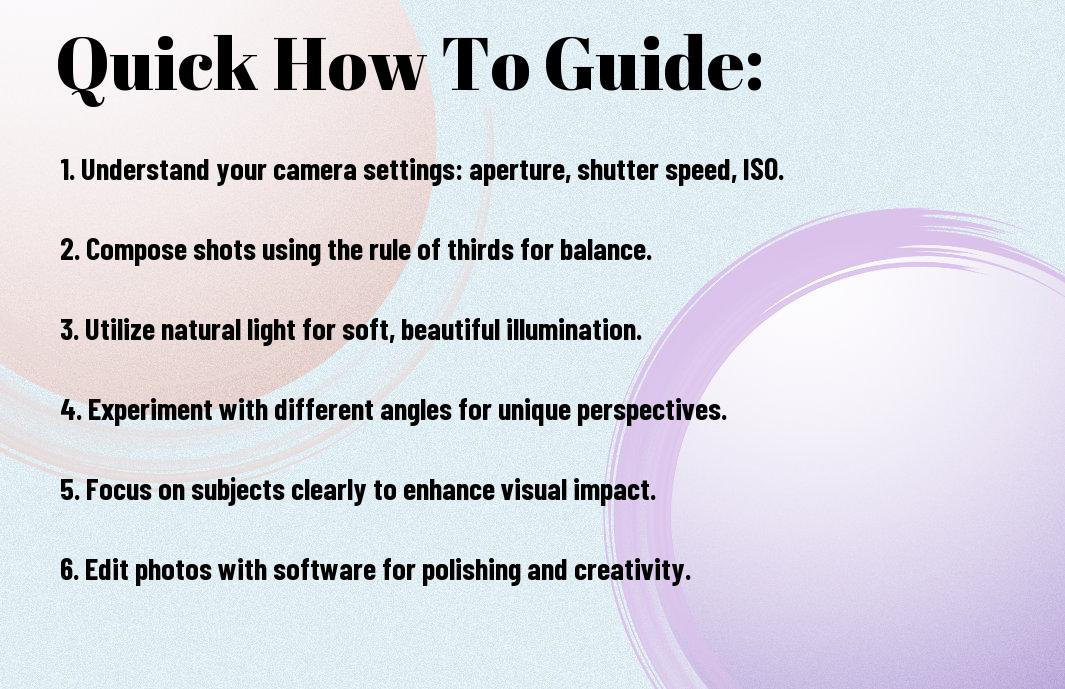
How-To Techniques for Capturing Stunning Images
While mastering photography techniques may seem daunting, the secret to capturing stunning images lies in understanding the fundamentals. By focusing on crucial elements such as your camera settings, lighting conditions, and composition, you can elevate your photography skills and create breathtaking visuals that resonate with your audience.
Understanding Your Camera Settings
If you want to take control of your photography, familiarizing yourself with your camera settings is crucial. Learning how to adjust factors like ISO, aperture, and shutter speed will enable you to manipulate exposure and depth of field, empowering you to achieve your desired results consistently.
Choosing the Right Lighting Conditions
Clearly, the right lighting can make or break your photographs. Different lighting conditions can create distinct moods and effects, so it’s important to be aware of how light interacts with your subject. Natural lighting, for example, can enhance colors and textures, while artificial lighting can add drama and focus.
Understanding how to work with various lighting conditions allows you to maximize your creative potential. Early morning or late afternoon light, often referred to as the golden hour, provides a soft, warm glow that enhances your images. Conversely, overcast days can diffuse harsh shadows, creating even, flattering light. Experimenting with different light sources, such as reflectors or flash, can also help you adapt to challenging environments and produce stunning results.
Composition Tips for Engaging Photographs
You can elevate your photography by mastering composition techniques that engage viewers. Focus on these crucial tips to enhance your images:
- Use the Rule of Thirds for balance.
- Incorporate leading lines to guide the eye.
- Frame your subject to create depth.
- Experiment with symmetry and patterns.
Recognizing the influence of these elements will help you capture more captivating photographs.
The Rule of Thirds Explained
Any photographer can benefit from applying the Rule of Thirds, a guideline that divides your frame into a 3×3 grid. By positioning your subject along these lines or at their intersections, you’ll create a more dynamic and visually appealing composition. This technique encourages movement and balance, steering the viewer’s eye towards points of interest.
Leading Lines and Framing
Thirds are just one element in composition; leading lines and framing enhance your photography by drawing attention and creating context. Leading lines, whether they’re roads, rivers, or architectural features, can guide the viewer’s eye directly to your subject, establishing a sense of depth and perspective. Framing, on the other hand, involves using elements within the scene—like branches or windows—to create a “frame” around your subject, enhancing focus and adding layers to your photographs.
Composition elements like leading lines and framing are significant in highlighting your subject and drawing the viewer into the scene. By strategically incorporating these techniques, you can create a more immersive and engaging experience, inviting your audience to explore the story behind your photograph. Aim for strong directional lines and thoughtful framing to support your focal point and heighten visual interest.
Factors Influencing Photo Quality
After mastering the basics of photography, it’s vital to consider various factors that can significantly impact the quality of your images. These include:
- Lighting conditions
- Camera settings
- Lens quality
- Stabilization techniques
- Post-processing
Recognizing how each of these elements interacts with one another will help you elevate your photography skills.
Lens Selection and Its Impact
One of the most important aspects of photography is choosing the right lens. Your lens determines the perspective, sharpness, and overall image quality. A good lens can make a significant difference in the output of your photos, whether you’re capturing landscapes, portraits, or macro shots. Quality lenses also minimize distortions and offer better color reproduction, allowing you to portray your vision more accurately.
Importance of Image Stabilization
Some photographers overlook the importance of image stabilization (IS) in their gear. It plays a vital role in reducing blurriness caused by camera shake, especially in low-light conditions or at slow shutter speeds. With IS, you can confidently shoot handheld without worrying about the quality of your images being compromised.
Factors such as the type of stabilization system—optical or digital—can affect your shooting experience. Optical stabilization corrects for camera movement within the lens, making it particularly effective for still subjects. Digital stabilization, on the other hand, may crop the image but can provide smoother footage in video recording. Understanding these differences allows you to make informed choices about equipment, ultimately leading to sharper, clearer photos.
How to Edit Photos for Maximum Impact
All great photography can be enhanced through artful editing. While capturing the perfect shot is vital, the magic often happens in post-processing. Understanding how to manipulate lighting, contrast, and color balance will elevate your images, making them more compelling and visually striking. With the right techniques, you can turn a good photo into a breathtaking one, ready to captivate your audience.
Essential Editing Tools and Software
For effective photo editing, you need reliable software and tools that suit your skill level and style. Popular choices include Adobe Lightroom and Photoshop for those seeking advanced features, while user-friendly options like Canva or Snapseed are great for beginners. Exploring different software will help you find what best fits your workflow and editing needs.
Applying Filters and Effects
Editing your photos to apply filters and effects can dramatically transform their look and feel. You can use filters to create a specific mood or atmosphere, enhancing the narrative of your image. Effects like vignettes or grain can add depth and character, so experiment with these options to discover what resonates with your vision.
A well-chosen filter can instantly convey a mood, whether you’re aiming for a warm, nostalgic feel or a cool, modern aesthetic. Don’t be afraid to adjust the intensity of the filter, as subtlety often leads to a more professional outcome. Consider layering effects, such as contrast adjustments with color filters, to achieve a more dynamic image that stands out while retaining its originality.
Tips for Mastering Portrait Photography
For stunning portrait photography, you need to focus on technique and connection. Keep these tips in mind:
- Choose the right lighting to enhance your subject’s features.
- Utilize a wide aperture for a beautiful background blur.
- Experiment with different angles to find the most flattering perspectives.
- Communicate effectively to make your subject feel comfortable.
Any of these strategies can significantly elevate your portrait photography skills.
Posing Techniques for Natural Looks
Even the best camera can’t replace a natural pose. Encourage your subjects to move or shift their weight to avoid stiffness. Experiment with tilting the head or leaning slightly forward to create more dynamic and engaging portraits. Establishing a relaxed atmosphere will help your subject appear more at ease and authentic.
Engaging with Your Subjects
Little interactions can make a big difference in your portrait sessions. By building rapport with your subjects, you can create a comfortable environment that fosters genuine expressions and emotions.
Subjects who feel at ease produce more authentic and captivating photographs. Start by engaging in light conversation or using humor to break the ice. Encourage them to share something personal or interesting about themselves, which can result in more natural, candid moments during the shoot. Taking a moment to connect before hitting the shutter will enhance the overall feel of your portraits.
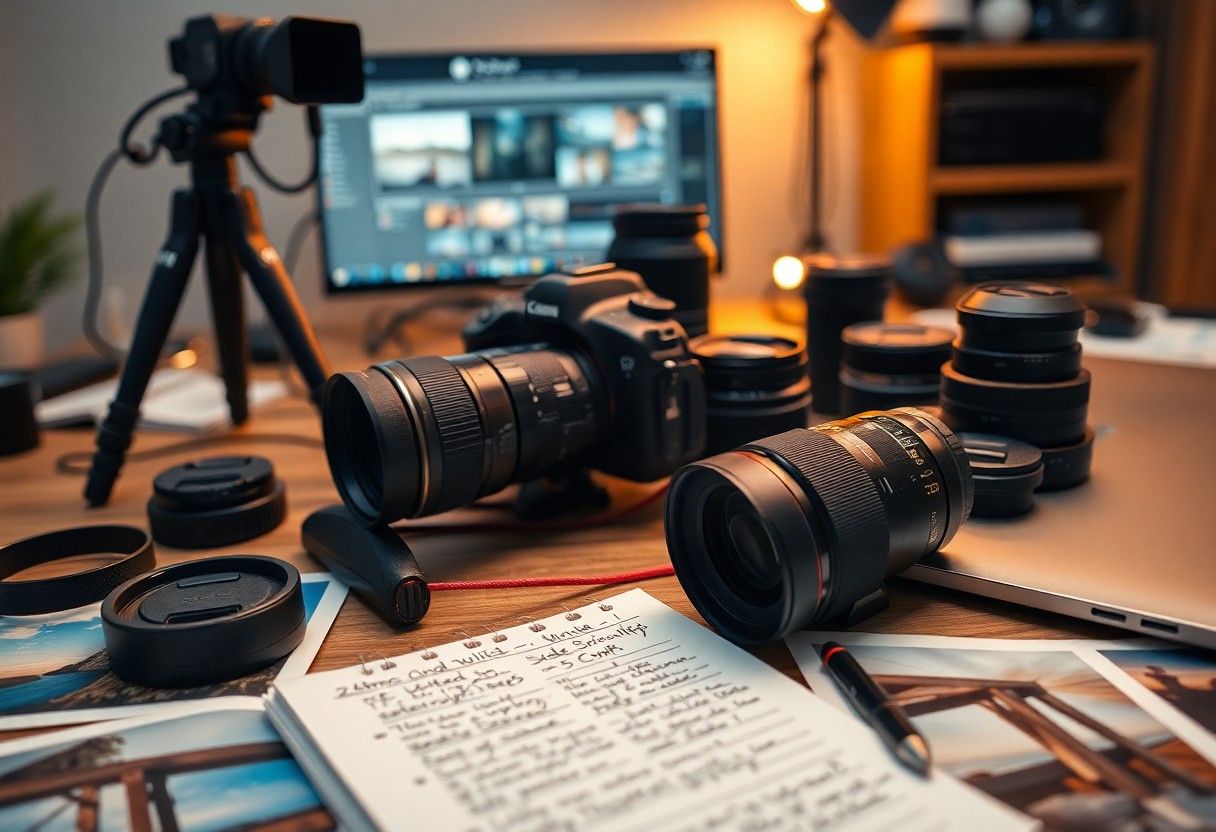
How to Build Your Photography Portfolio
Once again, crafting a photography portfolio is an necessary step in showcasing your skills and attracting potential clients. A well-organized portfolio not only highlights your best work but also reflects your unique style and vision. By carefully curating your images and presenting them in a cohesive manner, you can make a lasting impression on viewers and enhance your photography career.
Selecting Your Best Work
Clearly, the selection of images is vital in creating an impactful portfolio. Choose a diverse range of your best photographs that display your technical abilities, creativity, and artistic voice. Aim for quality over quantity; it’s better to include fewer exceptional images than to overwhelm viewers with mediocre shots. This will allow your strongest work to shine and present a clearer narrative of your talent.
Presenting Your Portfolio Effectively
Presenting your portfolio effectively is necessary for capturing your audience’s attention. A clean, organized layout that highlights your selected images will enhance the viewing experience. Consider how each photograph interacts with the others to create a flow that tells a story. Additionally, think about incorporating text elements, like captions or project descriptions, to provide context and showcase your thought process behind the images.
Your portfolio presentation is an opportunity to express your personal brand. Invest time in choosing the right format, whether it’s a physical book or an online platform. Make sure your website is user-friendly, showcases your work prominently, and is easily navigable. High-resolution images, proper file organization, and consistent branding will elevate your presentation, making it easier for clients and peers to connect with your artistry.
Conclusion
Taking this into account, mastering the basics of photography can significantly elevate your skills and the quality of your images. By applying these how-to techniques, you will gain confidence and create stunning photographs that capture the essence of your vision. Your understanding of composition, lighting, and technical settings will empower you to explore new creative avenues. So, go out and experiment with these fundamentals, as each shot you take is a step toward becoming the photographer you aspire to be.




Leave a Reply
You must be logged in to post a comment.