

Many visual storytellers may overlook the art of compositional alchemy, yet it plays a vital role in creating impactful narratives. By understanding and employing principles of composition, you can manipulate elements within your visuals to engage your audience more effectively. Whether you are capturing photographs or designing graphics, mastering these compositional techniques will allow you to convey emotions, emphasize key points, and guide your viewer’s journey through your story. Explore how to harness the power of compositional alchemy to elevate your visual storytelling to new heights.
The Concept of Compositional Alchemy
The idea of compositional alchemy revolves around the synthesis of various elements in visual storytelling to create a powerful narrative. By skillfully blending composition techniques, you can transform ordinary images into captivating visual tales that resonate with your audience. Compositional alchemy emphasizes how strategic arrangements, color schemes, and visual hierarchies can enhance both the emotional and informational layers of storytelling, ultimately crafting a more engaging experience for viewers.
Definition and Origins
To understand compositional alchemy, it’s important to explore its roots in both art and science. The term draws inspiration from alchemical practices, where base elements were transformed into something noble. In visual arts, this concept is applied to how various compositional techniques can intermix to elevate storytelling, enriching your audience’s connection to the work.
Principles of Composition
Alchemy involves a nuanced understanding of the principles of composition, which serve as foundational elements in your visual stories. These principles encompass balance, contrast, unity, and emphasis, all of which work together to guide viewers’ eyes and evoke emotions. Implementing these principles intentionally in your pieces can dramatically enhance the clarity and impact of the narrative you wish to convey.
In fact, by practicing the principles of composition, you can create visually striking stories that draw your audiences in. Balance ensures that no single element overwhelms the others, while contrast can highlight key aspects of your narrative. Unity allows for a cohesive look, guiding the viewer seamlessly through the story, while emphasis can spotlight critical moments or themes. Utilizing these principles helps you craft a visual narrative that not only tells a story but captivates and resonates with your viewers emotionally.

Visual Storytelling Explained
Now, visual storytelling refers to the art of conveying narratives through imagery rather than traditional text. This method allows you to captivate your audience’s emotions and thoughts, creating a more immersive experience. By integrating visual elements such as illustrations, photographs, and animations, you can enhance the depth of your narratives, making them more engaging and memorable.
Elements of Visual Narratives
Between colors, shapes, and compositions, the elements of visual narratives play a significant role in how stories are perceived. Each component contributes to the overall message, and your thoughtful selection of these elements can lead to a more compelling story. By balancing these visual aspects, you craft an experience that resonates with viewers on various levels.
The Role of Audience Engagement
At the core of effective visual storytelling is audience engagement, a vital factor that determines how well your narrative is received. When you create visuals that invoke curiosity or emotion, you encourage your audience to interact and invest in the story. This interaction not only amplifies their connection with your content but also deepens their understanding of the narrative.
For instance, consider how interactive infographics or animated sequences can draw viewers into a narrative, allowing them to explore the story at their own pace. This level of engagement enables your audience to actively participate in the storytelling process, transforming passive viewers into invested participants. By prioritizing engagement, you invite your audience to experience the narrative more vividly, fostering a stronger emotional connection and enhancing overall storytelling impact.
The Interplay Between Composition and Storytelling
You will find that composition plays a pivotal role in visual storytelling, as it dictates how your audience perceives and interprets the narrative. Effective composition guides the viewer’s eye through the frame, emphasizing key elements while weaving together different visual threads. This intentional arrangement enhances the overall storytelling experience, allowing your intended message to resonate more deeply with your audience. By harmonizing compositional techniques with storytelling, you can amplify the impact of your visuals and immerse the viewer in the narrative world you’ve created.
Visual Hierarchy and Focus
Any effective visual narrative establishes a clear visual hierarchy, directing the viewer’s focus toward the most important elements within the frame. By utilizing principles such as scale, contrast, and positioning, you can highlight imperative aspects of the story while guiding the viewer’s gaze naturally through the composition. This conscious arrangement empowers you to create a well-structured storytelling experience, ensuring that your audience remains engaged and fully grasp the nuances of your message.
Emotional Resonance Through Composition
Emotional resonance can be significantly influenced by your compositional choices, shaping how viewers connect with the narrative. Thoughtfully considered elements such as spacing, symmetry, and the use of color can evoke specific feelings and responses, allowing your audience to experience the story on a deeper level. By fostering an emotional connection through composition, you are able to create lasting impressions and enhance the overall impact of your visual storytelling.
The relationship between composition and emotion is subtle yet powerful. The way you position characters within a scene, use negative space, or incorporate symmetry can invoke feelings of tension, harmony, or even nostalgia. For instance, a tightly framed subject may elicit feelings of intimacy, while an expansive background can instill a sense of isolation. As you explore various compositional techniques, consider how they can enhance not only the narrative clarity but also the emotional depth of your visuals, forging a connection between your audience and the story you present.

Techniques of Compositional Alchemy
Many techniques can be employed in compositional alchemy to elevate your visual storytelling. By skillfully combining elements like color, light, balance, and symmetry, you can create compelling images that deeply resonate with your audience. Each technique serves a unique purpose, allowing you to enhance mood, evoke emotion, and guide viewers on a journey through your visual narrative.
Utilizing Color and Light
Against the backdrop of your visual narrative, color and light act as powerful tools that can alter perception and highlight key elements. By understanding how different hues evoke specific emotions and how light can create depth or drama, you can strategically use these aspects to enrich your storytelling. Mastery of color gradients and lighting effects can establish a mood that captures your audience’s attention and guides them through your story.
Balance and Symmetry in Visuals
An effective composition often hinges on the principles of balance and symmetry, which foster a sense of harmony and order. By arranging visual elements in a thoughtful manner—whether through perfect symmetry or intentional asymmetry—you strengthen the storytelling aspect of your visuals, making them more engaging and easier for viewers to process. This careful orchestration of components facilitates a clearer conveyance of your narrative.
But achieving the right balance and symmetry involves more than mere aesthetics; it influences how your audience interacts with the image. When elements are well-distributed across the frame, you create a pleasing visual experience that draws viewers’ eyes and encourages them to explore the entire composition. Exploring techniques like the rule of thirds or golden ratio can provide a solid foundation for creating balanced visuals that keep your audience captivated and invested in your narrative.

Case Studies in Compositional Alchemy
For a deeper understanding of compositional alchemy, you can explore the following case studies that illustrate its impact on visual storytelling:
- Film: “Inception” – Utilizes geometric framing to enhance the viewer’s understanding of layered realities.
- Photography: Steve McCurry’s “Afghan Girl” – Combines contrasting colors and eye contact to evoke strong emotional responses, resulting in over 25 million views.
- Advertising: Nike’s “Just Do It” Campaign – Engages dynamic compositions to inspire action, generating a 31% sales increase in the campaign’s first year.
- Illustration: Van Gogh’s “Starry Night” – Employs swirling patterns and a striking color palette to convey emotional turbulence, making it one of the most iconic paintings.
Film and Cinematography Examples
Along your journey through cinematic history, iconic films demonstrate how compositional alchemy enhances storytelling. Think of “Blade Runner” and its use of stark contrasts to convey dystopian themes, or “The Grand Budapest Hotel” with its symmetrical compositions that reflect whimsy and nostalgia. You can also consider “Birdman,” where continuous takes create an immersive experience, emphasizing character emotions through meticulous composition.
Art and Illustration Analysis
At the intersection of art and storytelling, compositional alchemy reveals how artists manipulate visual elements to evoke emotions and convey narratives. Take, for example, the works of Claude Monet, where the use of light and color composition transports you to serene landscapes. Additionally, modern illustrators often use layered compositions to create depth, inviting your gaze to explore every detail.
Due to the intricate interplay of color, shape, and form, studying art and illustration through the lens of compositional alchemy allows you to appreciate the subtleties that communicate profound messages. Each artistic choice influences your perception, guiding you through a visual journey that resonates on multiple levels. You can see how arrangement and emphasis are not merely aesthetic decisions but integral to storytelling, enriching your understanding and appreciation of both traditional and contemporary art.
Practical Applications for Creators
Once again, applying compositional alchemy in your visual storytelling can significantly elevate your narrative. To effectively engage your audience, consider how elements like color, space, and shape interact to create an emotional resonance. By merging these components, you can craft visuals that not only capture attention but also convey the intricacies of your story, leaving a lasting impact on your viewers.
Tools and Strategies for Implementation
The integration of compositional techniques requires thoughtful tools and strategies. Utilize graphic design software like Adobe Creative Suite or online platforms such as Canva to experiment with layout and color schemes. Additionally, explore storytelling frameworks to align your visual narrative with your intended message, enabling a cohesive and powerful presentation that resonates with your audience.
Common Mistakes to Avoid
Beside keeping an eye on your composition, be wary of common pitfalls that can undermine your visual storytelling. Overloading your visuals with too many elements can confuse your audience, while neglecting the emotional weight of your chosen colors may detract from your intended message.
A key mistake many creators make is failing to balance visual elements, leading to cluttered or chaotic compositions. Always strive for harmony by considering both negative and positive space. Additionally, ensure that your color palette aligns with the emotions you aim to evoke; mismatched colors can muddle your narrative’s intent. By being aware of these common missteps, you can enhance your visual storytelling and effectively engage your audience.
Final Words
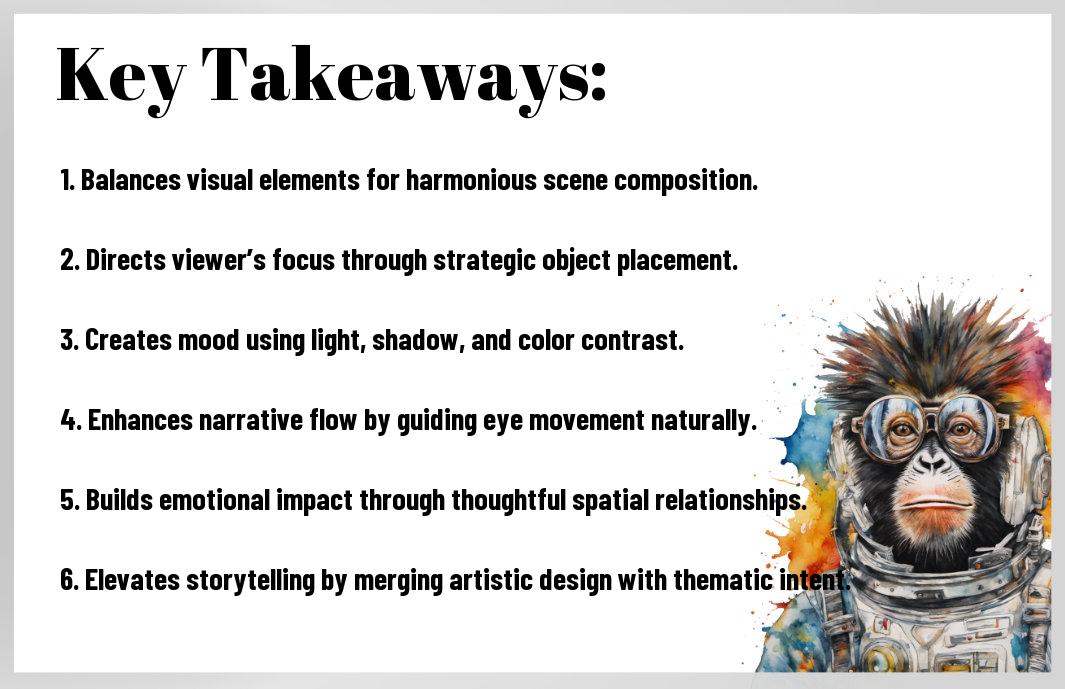
Taking this into account, you can see how compositional alchemy empowers your visual storytelling by harmonizing elements such as color, form, and spatial relationships. By mastering these principles, you enhance your ability to convey emotion and narrative depth, making your images not only more engaging but also more resonant. Ultimately, understanding these compositional techniques allows you to create a distinct visual language, helping your storytelling to captivate and connect with your audience on a deeper level.






Leave a Reply
You must be logged in to post a comment.