
Many people struggle with choosing the right photographer for their needs, whether it’s for a wedding, family portrait, or a special event. This comprehensive guide will provide you with the tools and knowledge to find a photographer who aligns perfectly with your vision and style. You will learn how to assess portfolios, understand pricing, and communicate effectively to ensure you get the best results. With these insights, you can confidently navigate your options and make an informed decision that captures your most cherished moments beautifully.
Navigating Local Options: The Art of Research
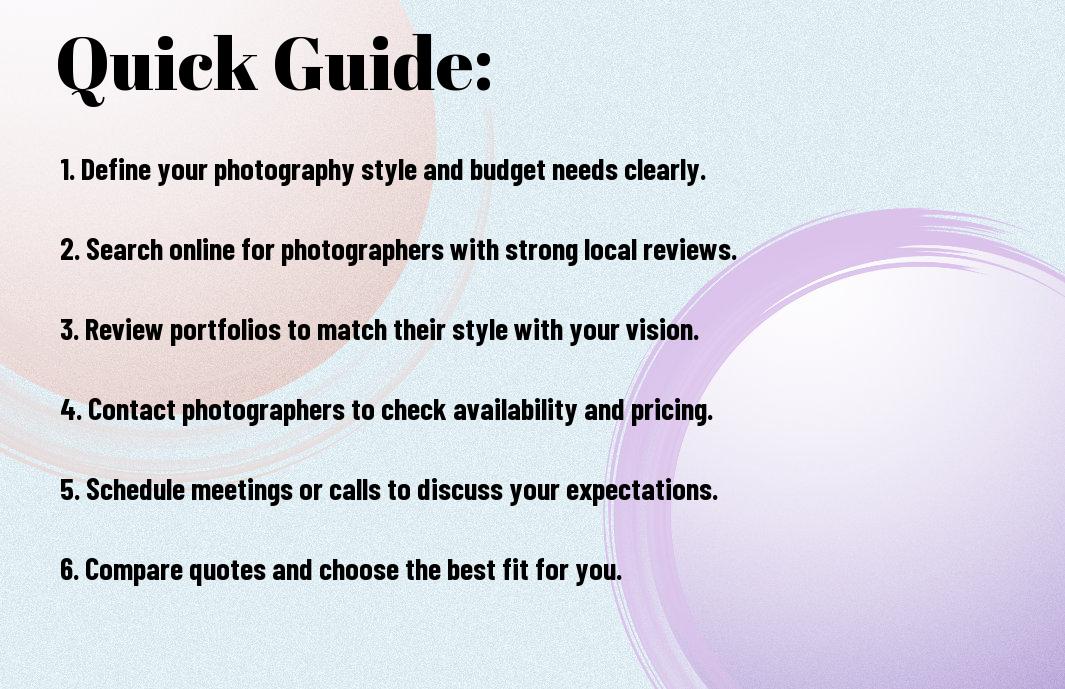
Researching photographers in your area involves more than simply scanning through Google results. Start by identifying specific styles or specializations that meet your needs, as this can dramatically narrow your search and help you find professionals who align with your vision. Once you have a clearer idea of your photography requirements, you can move forward with more targeted research, setting the stage for an informed decision.
Utilizing Online Directories and Review Platforms
Online directories like Yelp, Thumbtack, or even specialized photography sites allow you to filter results based on location, ratings, and specific photography styles. Pay close attention to client reviews and sample portfolios provided, as these insightfully reflect other customers’ experiences and the photographer’s skill level. Sorting through a wide array of options is simplified when you rely on these platforms to curate a list of potential candidates.
Tapping into Social Media and Local Networks
Social media platforms such as Instagram, Facebook, and even LinkedIn are invaluable for discovering local photographers. You can explore hashtags like #YourCityPhotographer or #WeddingPhotographyYourCity to find professionals who might not be listed in conventional directories. Additionally, engaging with local community groups or forums can yield personalized recommendations and referrals from people who have firsthand experience with various photographers in your area.
Utilizing social media and local networks opens up a treasure trove of opportunities when searching for photographers. Many photographers showcase their work on platforms like Instagram, allowing you to assess their style and creativity before even reaching out. You can also interact with their past clients through comments or tags, providing valuable insight into their reliability and professionalism. Joining Facebook groups related to your photography needs—such as wedding planning or family events—can lead to authentic recommendations and ongoing discussions about local talent, making your search easier and more streamlined.
Decoding Styles: Aligning Vision with Expertise
Photography is an art form with myriad styles, each offering a unique perspective. To find a photographer that resonates with your vision, you need to decode these styles and align them with your specific needs. Familiarizing yourself with the various genres—from portrait and landscape to documentary and fine art—will help guide your selection process and ensure that the final images reflect your intended message and emotion.
Identifying Your Desired Photography Genre
Deciding on a photography genre sets the foundation for your search. Whether you’re looking for stunning wedding images, engaging product shots, or artistic portraits, pinpoint your primary goal to hone in on photographers who specialize in that area. Consider your personal taste, the purpose of the photos, and any specific aesthetic you have in mind.
Analyzing Portfolios for Style Consistency
A photographer’s portfolio reveals their unique style and approach. When evaluating portfolios, look for consistency in tone, color palette, and composition across multiple projects. This not only indicates a photographer’s technical mastery but also their ability to deliver a cohesive body of work that aligns with your vision.
Take your time to explore deeply into each photographer’s portfolio and pay attention to how their style emerges through various contexts. Do their portraits convey the emotions you’re looking to portray? Is the lighting consistent with your vision? A strong portfolio demonstrates not just skill but a defined aesthetic that remains apparent throughout different projects, reassuring you that the photographer can replicate their success in your shoot. Trust your instincts as you sift through the photographs and envision your own story being told through their lens.
Assessing Credentials: The Value of Professionalism
Professionalism in photography goes beyond technical skills; it encompasses a photographer’s commitment to their craft and their clients. Evaluating credentials provides insight into a photographer’s expertise and reliability. Look for individuals who have invested time in their education and training, demonstrating a genuine passion for their work. A photographer’s portfolio showcasing past projects can reveal their unique style and adaptability to various situations. Prioritizing professional attributes will help ensure that you choose a photographer who can deliver high-quality results that meet your expectations.
What to Look for in Certifications and Experience
Certifications from recognized organizations indicate that a photographer has completed rigorous training and adheres to industry standards. Check for affiliations with professional bodies such as the Professional Photographers of America or local photography associations, which often require members to uphold ethical practices. Experience matters significantly; a diverse portfolio with varied styles and subjects showcases a photographer’s versatility. Assessing testimonials or references can further help you gauge their consistency and ability to handle different client needs effectively.
Understanding the Importance of Insurance and Legal Protections
Insurance is crucial in the photography business, serving as a safety net that protects both you and the photographer. Liability insurance safeguards against accidents or damage that may occur during a shoot, ensuring that you won’t face financial repercussions. Additionally, intellectual property rights come into play when discussing image usage. A professional photographer should provide clarity on who holds the rights to the images taken and how they can be used, thus avoiding future legal disputes. Secure contracts that outline these terms help safeguard both parties and foster a transparent working relationship.
Photography equipment is an investment, and accidents can happen regardless of how careful the photographer is. For example, suppose they accidentally damage a client’s property during a shoot. In that case, liability insurance protects against potential claims, covering repair costs or legal fees. Furthermore, understanding image rights is vital; without proper agreements, you risk not having the necessary permissions for distribution and use of your photos. Engaging a photographer who carries insurance and prioritizes legal protections fosters trust and allows you to focus on capturing unforgettable moments.
The Financial Aspect: Budgeting for Quality
Budgeting for photography requires a careful balance between quality and affordability, as every photographer sets different price points based on their skills, experience, and services offered. Invest time in defining what you value most—whether it’s artistic style, equipment quality, or post-production work—and allocate funds accordingly. Consider your overall budget in relation to your photography needs, as quality images are often an investment that pays off in cherished memories and lasting impressions.
How to Set a Realistic Photography Budget
Start by outlining your needs and identifying how much you’re willing to spend. Factor in all potential costs, including the photographer’s fees, travel expenses, and additional services such as editing or printing. Setting a holistic budget allows you to understand what’s feasible and avoids unpleasant surprises later on.
Unpacking Pricing Structures: Packages vs. A La Carte
Understanding photography pricing structures is key to maximizing your budget. Package deals typically offer a comprehensive set of services at a discounted rate, including multiple hours of shooting, edited images, and prints. In contrast, a la carte pricing allows for a tailored experience, where you can select specific services you need, often leading to higher costs if you’re not careful. Evaluating the offerings of both structures can illuminate the best option for your photography needs without overspending.
Packages can save you money while providing an all-inclusive experience, often featuring services pre-selected by the photographer to meet common needs. If you’re looking for a straightforward option with less decision-making, a package might suit you best. However, a la carte can provide flexibility; you can customize your shooting experience based on your specific desires, ensuring you only pay for what you truly want. Each has its pros and cons, so weigh them against your budget and exact needs.
Negotiation Tips for Better Deals
Negotiating with photographers might feel daunting, but it’s an opportunity to advocate for your budget. Open up a dialogue about your financial constraints and explore whether there’s wiggle room in their pricing. Many photographers appreciate candid conversations, as it reflects a genuine interest in their work while ensuring that you’re both on the same page.
- Be upfront about your budget to encourage honest discussions.
- Inquire about off-peak discounts or special offers.
- Consider booking multiple shoots with the same photographer for a lower rate.
- Thou should also express willingness to promote them on social media, benefiting both sides.
Effective negotiation involves preparation and mutual respect. Before approaching photographers, research their typical rates and gather data on competitor pricing in your area. Use this knowledge to justify your requests for discounts or additional services. Craft a narrative around why your project might be mutually beneficial, showcasing how a successful shoot could provide them with exposure or portfolio pieces.
- Stay polite and professional throughout the negotiation process.
- Ask about bundling services for a more substantial discount.
- Express genuine interest in their work to establish rapport.
- Thou may also consider offering a referral in exchange for better pricing.
Building a Connection: The Importance of Communication
Effective communication lays the foundation for a successful partnership with your photographer. Engaging in open dialogue fosters trust and helps you articulate your vision, ensuring that both you and the photographer are aligned on expectations. A clear understanding of your preferences, styles, and goals not only eases the creative process but also cultivates a more enjoyable experience. Valuing communication leads to captivating photos that resonate with your personality and tell your unique story.
Establishing Good Rapport with Your Photographer
Creating a rapport with your photographer allows for collaboration that goes beyond simply directing poses or choosing backdrops. This relationship is built on understanding and flexibility, where you feel comfortable expressing ideas and concerns. A friendly vibe during planning sessions encourages the photographer to capture your best moments naturally, resulting in authentic, candid images that reflect your true self.
Questions to Ask During the Initial Meeting
During your first meeting, asking the right questions can help you gauge the photographer’s style, approach, and compatibility with your vision. Inquire about their experience, portfolio, and the specifics of how they plan to make your shoot enjoyable and successful. You might want to ask how they handle challenges on the day of the shoot, their typical workflow, and if they offer any pre-shoot consultations to discuss ideas and preferences.
When formulating your questions, focus on areas that matter most to you. This could be their experience working with clients in similar situations or insights on how they might tailor their approach to fit your personality. For instance, asking about their favorite locations or how they source inspiration can reveal their creative processes and help establish a connection. Additionally, discussing logistics, such as timelines and post-session editing, will ensure you’re on the same page leading up to your big day. A thorough initial meeting can elevate your experience and the outcome of your photography project significantly.
To wrap up
With this in mind, finding the perfect photographer near you involves assessing your specific needs, researching local talent, and evaluating their portfolios and reviews. Take the time to reach out and communicate your vision; this will ensure that your chosen photographer aligns with your expectations. By following this comprehensive guide, you can make an informed decision and feel confident knowing you’ve selected a professional who will beautifully capture your moments.


Leave a Reply
You must be logged in to post a comment.