
There’s a world of creativity waiting for you as you explore the art of photography. Mastering the basics can tremendously enhance your skills and elevate your photography to new heights. In this comprehensive manual, you will learn imperative techniques, tips, and tools that can help you achieve stunning results. Whether you’re shooting with a smartphone or a professional camera, you’ll discover how to compose, expose, and capture images that resonate with your vision. Dive in and unlock the potential of your photography journey!

Understanding Camera Basics
While photography may seem daunting, grasping the fundamentals of your camera can significantly enhance your skills. Familiarizing yourself with the various features, controls, and mechanics of your camera allows you to express your creativity and produce stunning images. Knowing your camera’s capabilities lays the groundwork for capturing remarkable photographs.
How to Choose the Right Camera
Understanding your photography needs is important when selecting a camera. Consider factors such as your skill level, budget, and the types of photography you wish to pursue. Research various models and brands to find a camera that fits your preferences and will grow with your skills.
Tips for Camera Settings
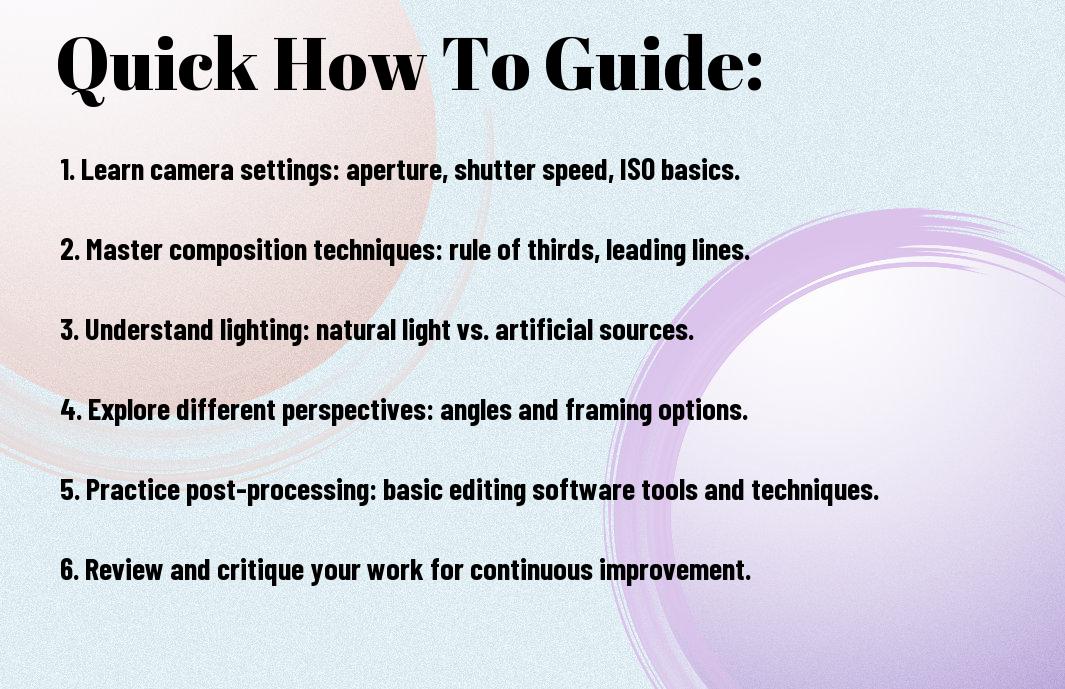
Even choosing the right camera settings can significantly affect your images. Start by experimenting with the exposure triangle—shutter speed, aperture, and ISO. Adjust these settings to match the lighting conditions and subjects you encounter. Utilize the following tips:
- Test different shutter speeds to capture motion.
- Play with aperture settings for depth of field.
- Adjust ISO to suit the level of light available.
Recognizing how these settings interact will help you make creative decisions in your photography journey.
For instance, understanding the interplay between shutter speed and motion can elevate your photography skills. You might want to freeze action with a faster shutter speed while embracing movement with a slower one. Additionally, consider these setting adjustments:
- In bright light, keep ISO low to reduce noise.
- Use wide apertures for beautiful bokeh effects.
- Increase ISO in low light for better exposure.
Recognizing the importance of these settings allows you to craft your images effectively under varying conditions.
Mastering Composition Techniques
If you want to elevate your photography, mastering composition techniques is vital. Good composition helps draw the viewer’s eye to your subject, creates balance, and can effectively convey emotion. By understanding and applying fundamental techniques, you’ll enhance the impact of your photographs and capture powerful images that resonate with your audience.
How to Use the Rule of Thirds
Assuming you want to create a well-balanced photo, the Rule of Thirds is a helpful guideline. To apply it, envision your image divided into nine equal sections by two horizontal and two vertical lines. Position key elements along these lines or at their intersections to create visual interest, enabling you to craft dynamic compositions that captivate your viewers.
Tips for Framing Your Shots
With effective framing techniques, you can enhance your photographs and draw attention to your subjects. Consider the following tips:
- Use natural elements like trees or doorways to create a frame around your subject.
- Experiment with foreground objects to add depth.
- Adjust your angle to find unique framing opportunities.
- Pay attention to negative space, allowing your subject to breathe.
Perceiving your surroundings from different perspectives can inspire creative compositions.
A well-framed shot emphasizes your subject while adding context and depth to the image. Here are additional tips to consider when framing your shots:
- Use lines, such as roads or fences, to lead the viewer’s eye toward your subject.
- Incorporate layers in your composition for added complexity.
- Vary your focal lengths to find the best framing for your shot.
- Be mindful of the background to ensure it complements your subject.
Perceiving these details will significantly enhance your photographic storytelling.
Lighting Essentials
Unlike many other aspects of photography, lighting is foundational to capturing stunning images. Understanding how to manipulate light can dramatically elevate your photography skills. Whether working with natural or artificial sources, mastering the lighting imperatives will enhance your images and help you convey your desired mood and atmosphere.
How to Utilize Natural Light
You can make the most of natural light by being mindful of the time of day and weather conditions. Morning and late afternoon provide softer, diffused light that can flatter your subjects. Also, look for shaded areas during midday to avoid harsh shadows that can detract from your photos.
Tips for Using Artificial Lighting
On the other hand, artificial lighting offers versatility and control in various shooting scenarios. To enhance your photographs, consider the following tips:
- Use diffusers to soften harsh light.
- Experiment with the direction of the light to create interesting shadows.
- Position your subject away from the light for dramatic effects.
Any adjustment in your setup can dramatically change the overall feel of your shot.
With artificial lighting, consistency is key to achieving professional results. Start experimenting with different types of artificial light sources—such as softboxes, LED panels, or flash units—to see what works best for your style. Ensure you have a good understanding of your equipment, as this will help you adjust settings effectively.
- Test different light temperatures to find the best match for your subject.
- Use multiple light sources to create depth and dimension.
- Practice balancing your light sources to avoid uneven exposure.
Any enhancement in your approach can significantly impact your photography outcomes.
Exploring Different Photography Styles
Despite the vast number of photography styles available, finding the one that resonates with you is vital for your creative expression. Each style, whether it’s portraiture, landscape, street, or macro, offers unique opportunities to convey your vision. By exploring various techniques and subjects, you can discover what excites your artistic sensibilities and helps you grow as a photographer.
How to Identify Your Style
Exploring your interests and preferences in photography can lead to the discovery of your unique style. Start by analyzing the types of images that inspire you, whether it’s the mood, composition, or subject matter. Create a collection of photographs that resonate with you and identify common themes that reflect your artistic voice.
Tips for Experimenting with Genres
Photography is a splendid playground for artistic exploration. Don’t hesitate to try different genres to expand your skill set and find your niche. Play with various subjects, lighting conditions, and techniques to see what captivates you the most. Here are some tips to help you get started:
- Participate in themed challenges or photography meetups.
- Take a workshop or online course in a genre you’ve never tried.
- Follow photographers in different styles on social media for inspiration.
- Set a personal project that mixes multiple genres.
Any style that excites you could become a significant part of your photographic journey.
Tips for experimenting with genres can lead to surprising discoveries and new levels of creativity. Exploring artistic boundaries often helps you develop skills that you may not have thought were within your reach. Here are some additional suggestions:
- Dedicate time weekly to focus on a specific genre you feel drawn to.
- Keep an open mind and be patient with your progress.
- Analyze your results, noting what you enjoyed and what you learned.
- Collaborate with other photographers to gain different perspectives.
Any genre can potentially capture your passion and propel your photography to new heights.
Post-Processing Techniques
After capturing the perfect shot, post-processing techniques are imperative to elevate your photography. These techniques allow you to enhance colors, adjust exposure, and sharpen details, transforming your images from simple captures to stunning works of art. Mastering these skills can significantly improve your visual storytelling and allow your individual style to shine through.
How to Edit Photos Like a Pro
Edit your photos with precision to achieve a professional look. Begin by adjusting basic elements like brightness, contrast, and saturation. Familiarize yourself with tools such as cropping and sharpening to improve composition and clarity. Don’t shy away from experimenting with presets and filters to develop your unique style while maintaining a natural feel.
Tips for Using Editing Software
The right editing software can enhance your workflow and the quality of your final images. Here are some tips to help you navigate your editing software effectively:
- Organize your files for easier access and management.
- Utilize non-destructive editing to preserve your original images.
- Always work with RAW files for greater flexibility.
Knowing how to manipulate layers and masks will allow for more intricate adjustments, giving you greater control over your final image. Take the time to explore and practice each function to gain confidence and maximize your editing skills.
Using various editing techniques, you can unlock the full potential of your photographs. Embrace the learning curve, and don’t hesitate to seek out tutorials specific to your software of choice. Understanding shortcuts can save you time and streamline your creative process.
- Experiment with different tools to find what works best for your workflow.
- Stay updated on software enhancements and new features.
- Engage with online communities for tips and advice from fellow photographers.
Knowing how to utilize these resources will empower you to express your creative vision more effectively in your photography.
Common Photography Mistakes to Avoid
Now that you’re on the journey to perfecting your photography, it’s important to be aware of common mistakes that can hinder your progress. From overexposing your shots to neglecting composition, these pitfalls can overshadow your potential. By actively recognizing and addressing these errors, you can enhance your photography and capture stunning images that reflect your vision and creativity.
How to Recognize and Fix Errors
Photography errors can be subtle yet impactful. Start by reviewing your photos with a critical eye—check for issues like improper exposure, annoying distractions, or lack of focus. Utilize editing software to adjust settings and correct mistakes, but strive to get the shot right in-camera to avoid reliance on post-processing. With practice, you’ll learn to identify and rectify these errors before clicking the shutter.
Tips for Improving Your Skills
Skills in photography evolve through continuous learning and practice. To enhance your abilities, immerse yourself in photography tutorials, workshops, or online courses. Engage with other photographers to exchange tips and feedback, and challenge yourself with different genres or styles of photography. To support your growth, consider these strategies:
- Invest time in understanding your camera settings.
- Practice regularly to build muscle memory and refine technique.
- Study the work of masters to gain creative inspiration.
Thou can improve significantly by seeking out new experiences and staying open to constructive criticism.
With every click of the shutter, you’re presented with an opportunity to learn. Seek out practical exercises such as street photography, portraiture, or landscapes, pushing your creative boundaries. Take the time to evaluate your progress and set targeted goals for your next shoot. To aid your skill development, implement these practices:
- Join a local photography club or online community for support and motivation.
- Create a portfolio showcasing your best work to track your improvement.
- Dedicate time to experiment with different techniques and styles.
Thou will find that consistent effort leads to significant advancement in your photography journey.
Summing up
Presently, this comprehensive how-to manual equips you with necessary techniques to elevate your photography skills. By understanding the basics, you’ll have the tools to creatively express your vision and capture stunning images. Emphasizing practical exercises alongside theoretical knowledge, this guide ensures a structured approach to mastering your camera and developing your unique style. As you incorporate these principles into your practice, you’ll find yourself more confident in your abilities, ultimately transforming the way you perceive and engage with the world through your lens.




Leave a Reply
You must be logged in to post a comment.