
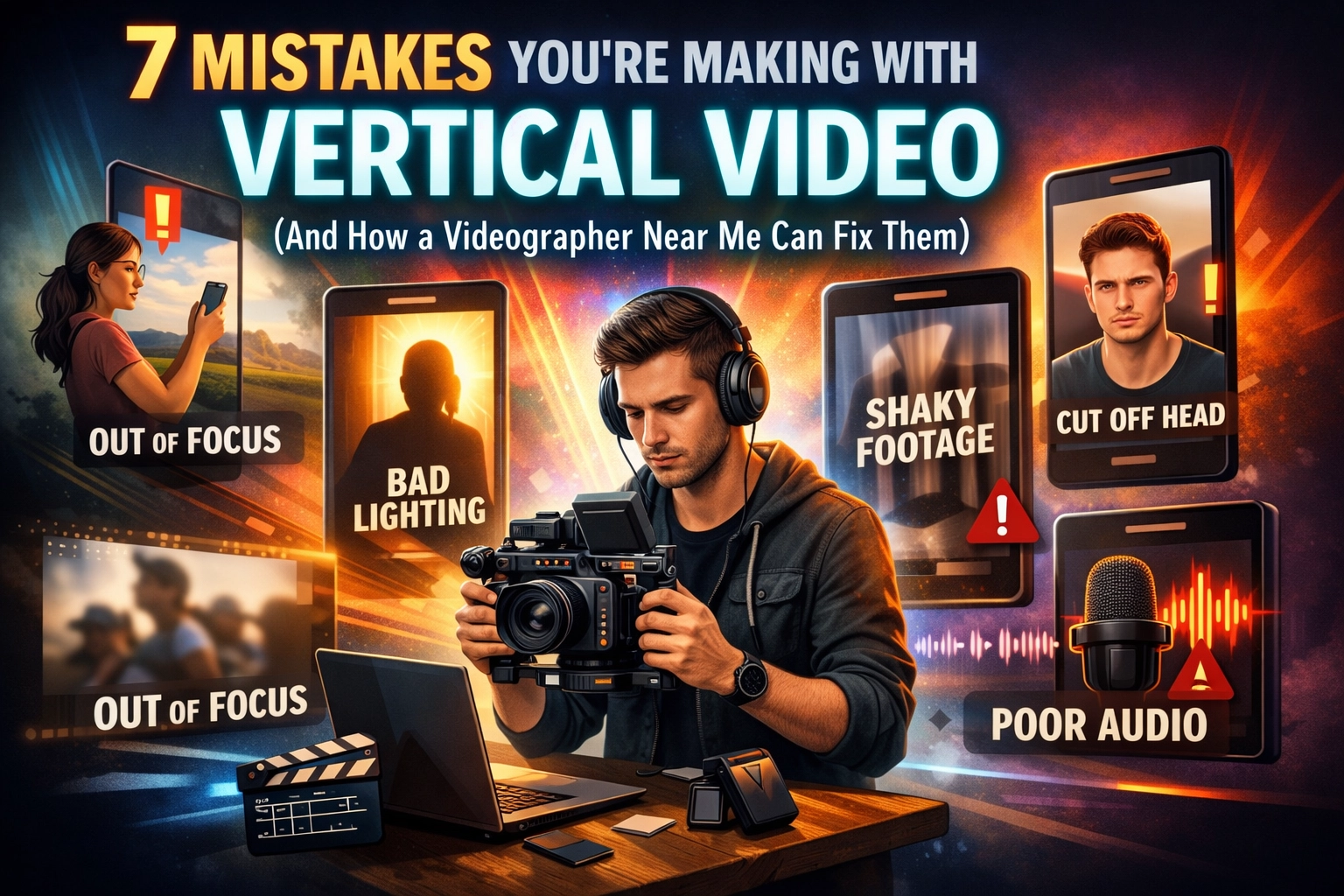
Vertical video is the default now—but “default” doesn’t automatically mean “easy.” Learn the most common 9:16 pitfalls (and the quick fixes) so your shorts, Reels, and ads look clean, confident, and professional.
Let’s time-travel for a second. Remember 2012? Post a vertical video and someone would immediately comment, “Turn your phone!” Like it was a law of filmmaking.
Now vertical is the main event. TikTok, Instagram Reels, YouTube Shorts, and mobile-first ads made 9:16 the format people actually choose to watch. The catch: because vertical is everywhere, it’s easy to assume “good enough” is good enough. That’s usually where brands (and busy creators) get stuck—your ideas are solid, but the execution feels a little… DIY.
If your videos look grainy, flat, shaky, or just not as clean as the ones you keep saving for “inspo,” you’re not alone. You’re just running into the same technical bottlenecks most people hit when they’re filming and editing everything themselves.
Below are seven common vertical video mistakes (plus straightforward fixes you can use right away). And if you’d rather skip the trial-and-error, you can always start at ProShoot to connect with a verified local pro—searching for a videographer near me there is a simple way to get professional results without turning your week into a production marathon.
1. The "Potato Quality" Resolution Trap
A super common misconception: because vertical video is “just for phones,” resolution doesn’t really matter. In reality, modern phones have insanely sharp screens—and social platforms love compressing your footage the second you upload it. So if you start with basic 1080p and then the platform squeezes it down, your final clip can come out softer (or noisier) than you expected.
Professional videographers tend to play it safe with one simple habit: shoot in 4K (or higher), even if the final deliverable is vertical. That extra detail gives you breathing room to crop, stabilize, and “punch in” without the image turning to mush. It’s one of the easiest ways to keep that crisp look that makes people pause mid-scroll.
If you’re still not getting that clean, premium finish, a professional videographer near me can help dial in capture settings (and bring the sensors, lenses, and stabilization gear that make a real difference), so your footage looks sharp on basically any screen.
2. Ignoring the "Funhouse Mirror" Effect (Lens Distortion)
If you’ve ever filmed a selfie and thought, “Why does my face look… kinda different?” you’re not imagining it. That’s lens distortion. Most phone cameras are wide-angle, which is great for fitting a lot into the frame—but it’s not always flattering for people, products, or interiors once you’re working in a tight 9:16 crop.
In vertical, distortion is usually most obvious near the edges (and it gets worse in small rooms). A pro will pick the right focal length—or simply change distance and framing—so faces look natural, lines stay straight, and the whole shot feels more “intentional” and less like a quick phone clip. When you book through ProShoot, you’re getting someone who thinks about these details without you having to ask—so you look like yourself, not like you’re in a funhouse mirror.
3. The "Static Boredom" Syndrome
People don’t need constant chaos—but they do need a reason to keep watching. In horizontal video, you can get away with wider pans and tracking shots. In vertical, a lot of DIY clips end up as one locked-off angle where nothing changes. That’s when viewers drift away in about half a second.
Vertical video usually works best with intentional motion: small push-ins, gentle reframes, planned transitions, and subject movement that feels natural. The key is smoothness (not shake). Professional videographers lean on gimbals, stabilization, and purposeful camera moves to keep things lively without making anyone dizzy—and they know how to guide the viewer’s eye inside a tall 9:16 frame.
4. Relying on "Auto-Reframe" AI
Auto-reframe tools are tempting—drop in a horizontal clip, hit a button, and suddenly you’ve got a vertical version. For quick drafts, sure, it can help. But for anything client-facing (ads, brand content, product videos), it often misses what actually matters.
AI can’t reliably understand the point of your shot. It might center a face while cropping out the product, the logo, or the hand gesture that makes the moment work. Or it may “snap” the frame around whenever someone else enters, which usually looks distracting (and a little cheap).
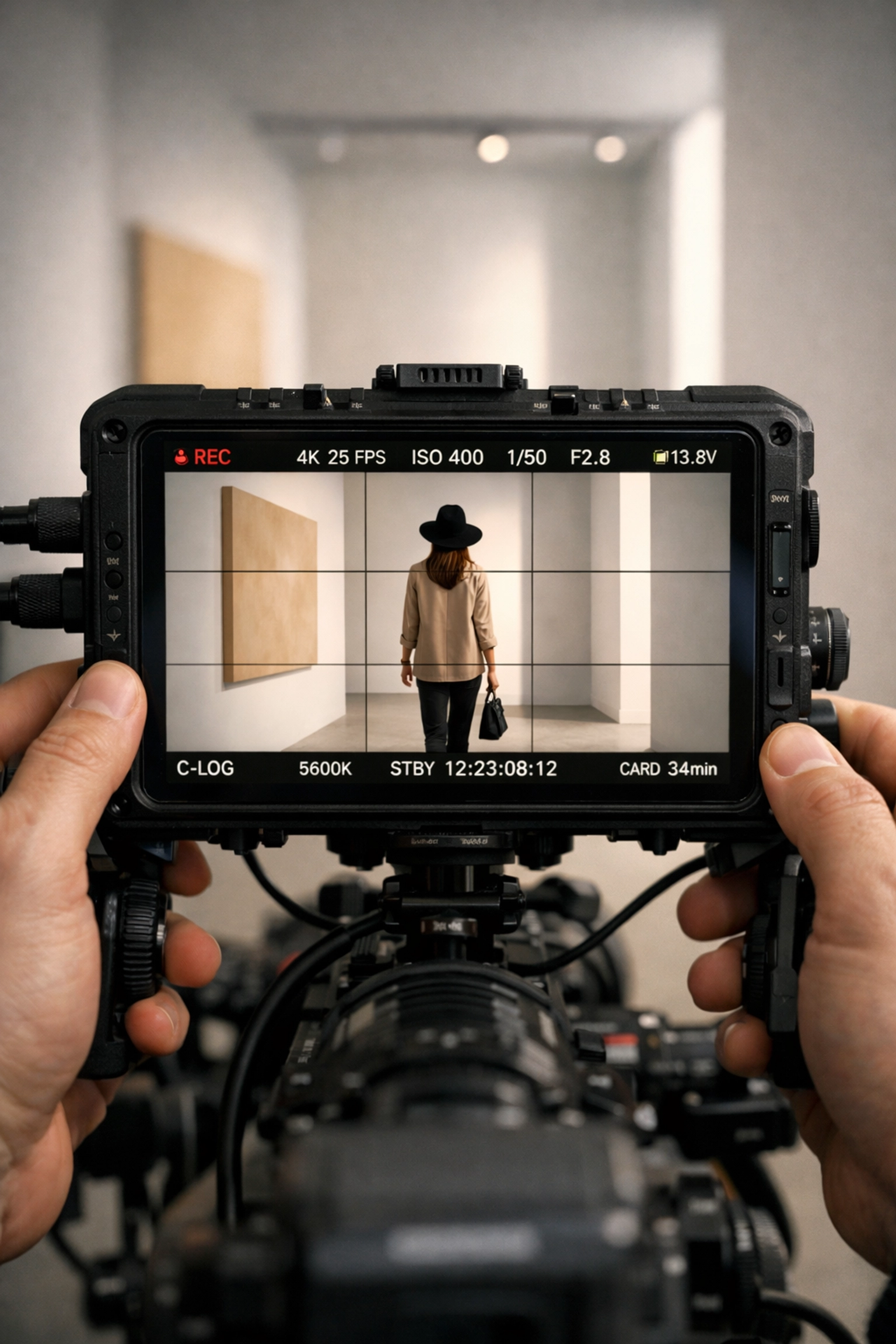
A professional doesn’t just “reframe”—they compose. They’re thinking about safe zones for captions, where your subject’s eyes land, how much headroom looks natural in 9:16, and what needs to stay on-screen from start to finish. When you search for a videographer near me on ProShoot, you’re not just hiring someone to point a camera—you’re hiring someone who protects the story and the brand details in every shot.
5. The "Silent Movie" Blunder (Poor Audio)
Here’s the truth: people will forgive “okay” video, but they won’t hang around for bad audio. If your clip sounds echo-y, windy, or like it was recorded from across the room, viewers swipe—fast. And a lot of DIY vertical videos are still relying on the phone mic (or a cheap clip-on that picks up every single background sound).
If you want your content to feel professional, treat audio like it matters as much as the visuals: lav mics for dialogue, directional mics when needed, and clean mixing in post. ProShoot connects you with pros who show up with the right gear—and the experience to make your voice sound clear, present, and confident (not “I’m filming this in a tunnel”).
6. Lighting That Lacks Depth
Vertical frames are narrow, and that can make lighting feel deceptively “fine” while you’re filming—until you watch it back and everything looks flat. When the subject and background are lit the same way, you lose separation, and the whole video starts to feel like a quick phone clip instead of something you’d confidently run as an ad or post for your business.

Professional lighting isn’t about blasting everything brighter—it’s about shaping the face, controlling shadows, and creating separation so your subject doesn’t blend into the background. That might mean a simple three-point setup, a soft key by a window, or planning around golden hour on purpose. A pro knows how to get depth fast—and recreate it consistently across shoots.
If you’re leveling up your brand’s look in places like Austin or Chicago, having a pro handle lighting is one of the quickest ways to make your content look more premium—and, honestly, more trustworthy.
7. The DIY Burnout (Trying to Do It All)
The biggest mistake is the sneaky one: assuming that because it’s “just a 30-second clip,” you should handle everything yourself. Scripting, shot planning, lighting, filming, retakes, editing, captions… it adds up fast. And it usually steals time from the work you actually need to be doing.
Hiring a professional isn’t about being “too good” to DIY. It’s about buying back your time and getting a repeatable process you can rely on. When you find a videographer near me through a trusted platform like ProShoot, you’re working with a verified, insured pro who can take an idea to finished content way faster (and with fewer headaches) than trial-and-error.
Why ProShoot is the Future of Hiring Pros
If you’ve ever tried to hire a videographer the “old-school” way, you know the stress: endless DMs, inconsistent pricing, vague deliverables, and that weird feeling of not knowing what you’re actually going to get on shoot day.
ProShoot keeps it simple (and safer). It’s a marketplace built for busy people who still care about quality, where every pro is:
- Verified: No more guessing if the portfolio actually belongs to them.
- Insured: Peace of mind matters. If a tripod tips over or a lens breaks, you’re covered.
- Localized: Whether you’re looking in a major market or your hometown, you can connect with talent fast—like Atlanta Photographers or Houston Photographers.

Video content isn’t a trend—it’s one of the main ways people decide what to buy, who to trust, and what’s worth their attention. And as feeds get more competitive, the gap between “good enough” and “professionally crafted” gets easier to spot.
Ready to Capture Better Vertical Video?
If you’re serious about growing with short-form content, you don’t need to do it perfectly—you just need a smart setup, a clear plan, and someone who knows how to execute. Whether you want a real estate walkthrough, a high-energy event recap, or a library of short clips for your brand, the right pro makes it all feel a lot more doable.
- Looking for a pro? Find a Videographer Near Me
- Have questions? Check out our FAQ or Contact us today.
- Ready to work? Browse Jobs and see what’s happening across professional photo and video.
Vertical video is the canvas of the modern world—make sure you’re using the right tools.


Leave a Reply
You must be logged in to post a comment.