

Over the last few years, the importance of visual storytelling in business has become undeniable. As you strive to connect with your audience, corporate photography can serve as a powerful tool to convey your brand’s identity and values. By thoughtfully curating images that reflect your company’s narrative, you can create a lasting emotional connection with your customers. In this blog post, we will explore how to utilize corporate photography effectively to articulate your story and enhance your brand’s messaging.
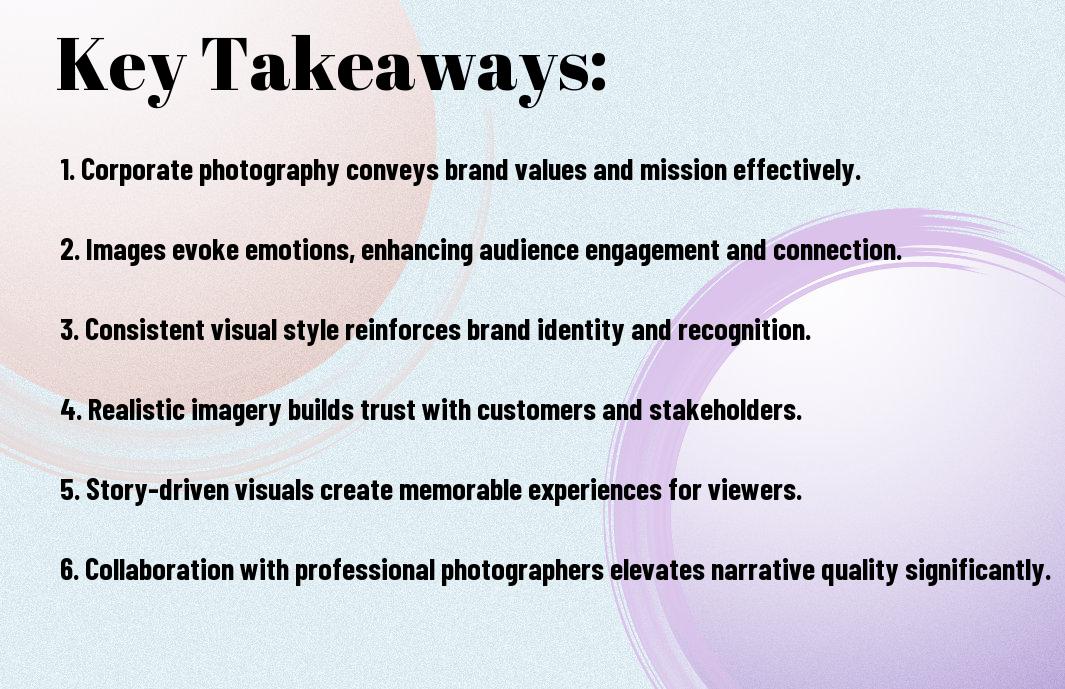
The Importance of Visual Storytelling
To effectively engage your audience and convey your brand’s message, visual storytelling serves as an vital tool. In today’s digital landscape, where attention spans are short and competition is fierce, compelling visuals can create an emotional connection with your audience. By weaving images and narratives together, you can artfully demonstrate the values and mission of your company, ensuring your story resonates and leaves a lasting impression.
Defining Visual Storytelling
Before you can harness the power of visual storytelling, it’s important to understand what it entails. Visual storytelling combines images, videos, and graphics with narrative elements to create a cohesive story that captivates viewers. It goes beyond simply showcasing products; it likens your brand to a relatable character, helping your audience visualize the experiences and emotions that define your corporate identity.
Benefits for Corporate Branding
Defining your brand through visual storytelling not only showcases your products but solidifies your company’s identity. By effectively combining visuals with narrative, you create a unique brand voice that reflects your values and mission, making your company more memorable to consumers. This authentic representation builds trust, fostering loyalty among existing customers while appealing to potential ones.
Benefits of investing in visual storytelling for corporate branding extend far beyond mere aesthetics. Engaging images and thoughtful narratives can enhance your brand’s visibility, helping you stand out in a crowded marketplace. Additionally, visual content is more shareable on social media platforms, amplifying your reach while allowing your audience to connect with your brand on a personal level. Ultimately, this revitalizes your messaging and establishes a strong emotional bond with your target audience.

Crafting Your Narrative
The process of crafting your company’s narrative is crucial in establishing a deep connection with your audience. By shaping a compelling story, you can create an emotional bond that fosters trust and loyalty. Through corporate photography, you can visually communicate your values, mission, and vision, making your narrative more relatable and impactful. This strategic storytelling approach allows you to stand out in a crowded marketplace, presenting a clear picture of who you are and what you represent.
Identifying Your Brand’s Story
One of the first steps in crafting your narrative is to identify your brand’s story. Begin by reflecting on your company’s origins, mission, and the values that drive you. Think about the challenges you’ve overcome and the impact you aspire to make in your industry. By clearly defining your story, you set the foundation for consistent messaging and a stronger connection with your audience.
Elements of a Compelling Narrative
Before you examine the visual aspects, consider the key elements that make a narrative compelling. A strong narrative should include authenticity, conflict, resolution, and emotional resonance. Establishing a relatable protagonist—often your customer or employee—and illustrating their journey can evoke empathy and engagement. Incorporating these elements will help you create a story that sticks with your audience and encourages them to invest in your brand.
Due to the significance of these elements, integrating them into your narrative allows for deeper engagement with your audience. Start by ensuring that your brand’s authenticity shines through; people connect with genuine stories. Next, introduce conflict or challenges that illustrate your brand’s journey, allowing your audience to relate on a personal level. Aim for resolution, highlighting how your brand overcomes obstacles and contributes positively to the lives of your customers. Finally, ensure your narrative evokes an emotional response, whether through compassion, inspiration, or motivation, to foster loyalty and advocacy among your audience.

The Role of Corporate Photography
After establishing your brand identity, corporate photography serves as a visual backbone that reinforces your company’s narrative. It brings your story to life by showcasing your values, culture, and the people behind your brand. High-quality images can engage your audience, foster trust, and elevate your marketing strategies, ultimately forming a stronger connection with your clients and stakeholders.
Choosing the Right Photographer
Behind every powerful image is a skilled photographer who understands your vision. When opting for the right photographer, consider their portfolio, style, and experience in corporate photography. It’s crucial that they resonate with your brand’s values and can capture the essence of your company in a manner that aligns with your storytelling goals.
Types of Corporate Photography
Across the dynamic field of corporate photography, various types serve specific purposes in illustrating your brand. Understanding each type can help you select the right approach for your visual narrative. The following are the primary types of corporate photography:
| Type | Description |
| Portrait Photography | Captures individual employees or leadership teams to convey personality and professionalism. |
| Event Photography | Documents company events, conferences, or celebrations, encapsulating the atmosphere and key moments. |
| Product Photography | Showcases your products in a visually appealing way, highlighting their features and benefits. |
| Corporate Social Responsibility | Highlights your company’s community involvement and initiatives, reinforcing your commitment to social values. |
| Workplace Photography | Displays your company’s environment and culture, creating a sense of place that attracts talent. |
Understanding the different types of corporate photography empowers you to make informed choices about how to visually tell your story. Each type serves a distinct purpose and can factor into your overall branding strategy. The list below summarizes their key benefits:
- Enhances your brand image.
- Increases engagement with your audience.
- Communicates your company values
- Strengthens your marketing efforts.
- Attracts potential clients and talent.
Techniques for Effective Visual Storytelling
All successful visual storytelling relies on a combination of techniques that allow you to effectively convey your company’s narrative. By mastering composition and framing, along with the strategic use of color and lighting, you can create compelling images that resonate with your audience and highlight your brand’s values.
Composition and Framing
To create impactful images, focus on composition and framing to guide your audience’s attention. Use techniques such as the rule of thirds, leading lines, and balanced symmetry to design your photographs, ensuring that every element in the frame supports your story and adds to the overall message you wish to convey.
Use of Color and Lighting
The colors and lighting in your photographs can significantly influence the mood and tone of your visual narrative. Choosing a cohesive color palette that aligns with your brand can evoke specific emotions, while proper lighting can create depth and contrast that enhances your images, drawing viewers into your story.
Another important aspect of using color and lighting is understanding their psychological impact. Colors like blue can instill trust, while vibrant reds can evoke passion and energy. Similarly, warm lighting can create an inviting atmosphere, whereas cooler tones may convey professionalism. By thoughtfully selecting color schemes and lighting techniques, you can amplify your visual storytelling and ensure that your corporate photography aligns perfectly with your brand’s identity and message.

Integrating Visuals into Your Marketing Strategy
Not all visual content is created equal; integrating carefully curated photography into your marketing strategy requires intention and alignment with your brand’s narrative. By strategically selecting images that reflect your company’s values, mission, and personality, you can create a cohesive message that resonates with your target audience. This will help you stand out in an increasingly visual market, fostering deeper connections with potential customers and enhancing brand recognition.
Social Media and Online Presence
With engaging visuals at the forefront of social media, your online presence needs to be striking. High-quality corporate photography not only enhances your posts but also boosts your brand’s credibility, attracting more views and interactions. By sharing consistent imagery that tells your unique story, you can effectively capture the attention of your audience and cultivate a community around your brand.
Print Materials and Advertising
With compelling visuals in your print materials, you have the power to leave a lasting impression. Engaging photography can elevate brochures, business cards, and advertisements, ensuring that your message stands out in the crowded marketplace.
Presence in print media reinforces your brand identity and showcases your company in a professional light. High-quality images can serve to communicate your brand story at a glance, while consistent visual themes across different mediums create a unified perception. Whether you’re designing product catalogs, flyers, or billboards, investing in quality photography can significantly enhance the effectiveness of your advertising, drawing in potential clients and leaving a memorable mark.
Measuring the Impact of Visual Storytelling
Now that you have invested in visual storytelling through corporate photography, it’s imperative to gauge its effectiveness. Measuring the impact involves collecting data and analyzing how your visuals resonate with your audience. By understanding viewer engagement, conversion rates, and overall brand perception, you can refine your approach and enhance your storytelling efforts.
Analytics and Feedback
Against the backdrop of data-driven marketing, utilizing analytics tools becomes important. By examining engagement metrics such as social shares, likes, comments, and website traffic, you gain insights into which aspects of your visual storytelling truly connect with your audience. Feedback from customers can further enrich your understanding of their experiences and preferences.
Case Studies and Success Stories
Behind every successful visual storytelling campaign, there are numbers that tell a powerful story. By looking at case studies of brands that have effectively utilized photography, you can identify strategies that work. Here are some notable examples:
- Company A: Increased brand engagement by 75% using vibrant images on social media.
- Company B: Boosted sales by 30% after implementing a professional photography campaign on their website.
- Company C: Achieved a 50% rise in conversion rates through compelling visual storytelling in their email marketing.
- Company D: Expanded their market reach by 40% by sharing authentic company culture photos on LinkedIn.
Storytelling through visuals is not just about aesthetics; it’s about measurable success. These case studies illustrate how effective photography can create real results. As you analyze your own efforts, consider how you can apply similar tactics to your campaigns, ensuring your narrative continues to evolve and resonate with your audience.
Final Words
Presently, utilizing corporate photography for visual storytelling empowers you to authentically convey your company’s narrative. By strategically capturing images that resonate with your brand’s values and mission, you enhance engagement and build lasting connections with your audience. As you incorporate these visuals into your marketing strategy, you will create a compelling narrative that not only attracts but also retains customers. This approach not only showcases your products and services but also highlights the unique culture and ethos of your organization, allowing you to stand out in a competitive marketplace.






Leave a Reply
You must be logged in to post a comment.