

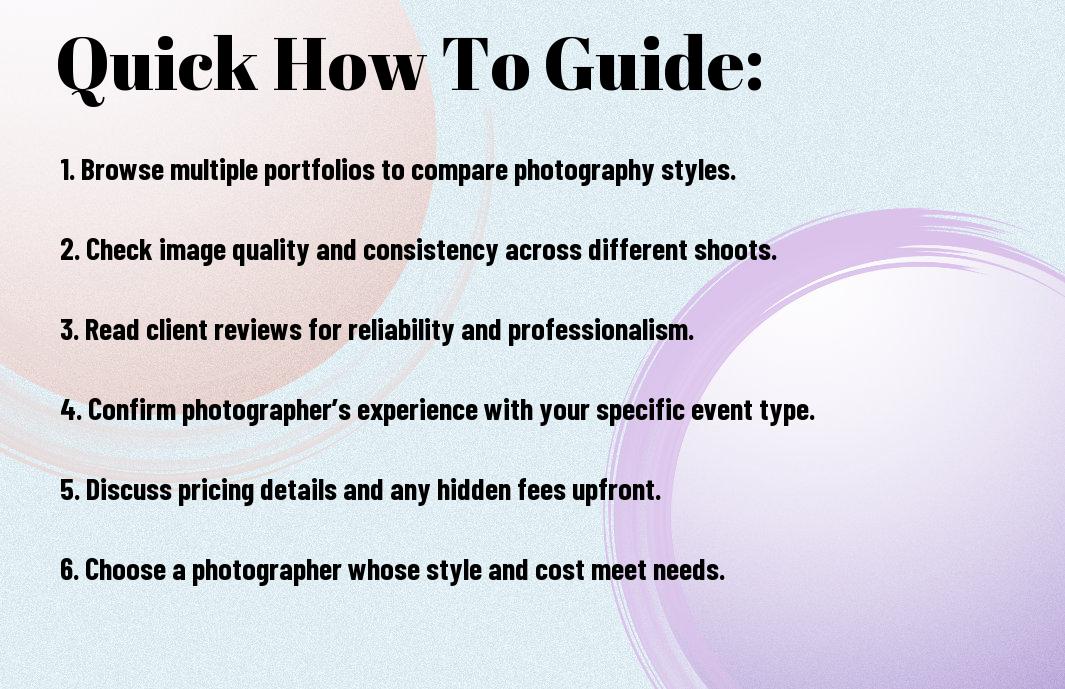
Reviewing portfolios is necessary when searching for an affordable photographer who meets your needs. You want someone who can capture your special moments without breaking the bank. In this guide, you’ll learn how to evaluate a photographer’s work, identify their unique style, and assess their experience, all while ensuring you stay within your budget. By following these straightforward steps, you can confidently select a photographer who delivers quality results at a price you can afford.
Balancing Budget and Quality: What to Expect
Finding the sweet spot between budget and quality often requires some compromises. You can expect photography that meets your basic needs within budget constraints, but this may limit options regarding experienced photographers or advanced editing techniques. Prioritize your must-haves and be prepared to adjust other elements. Specific deliverables like resolution, rights, and the number of edits may also influence your overall experience and satisfaction. Stay open-minded and set realistic expectations for low-cost photography within your specified budget range.
Defining Your Budget Without Compromise
Your budget should reflect what you can comfortably spend while still aligning with your needs. First, outline your necessary photography requirements, then determine a realistic figure that accommodates these needs. Consider additional costs, such as travel fees or post-processing, which can quickly add to the final price. Having a clear, defined budget allows you to cut unnecessary expenses effectively while focusing on your priorities without foregoing quality.
Recognizing Value Over Cost: What Cheap Really Means
Cheap doesn’t always equate to poor quality, but it can indicate the photographer’s experience level or the services included. Understanding value over mere cost is necessary to make an informed decision. Sometimes, you may stumble upon talented photographers who are just starting out and offer competitive rates. These individuals can provide unique perspectives and fresh ideas, ensuring you receive quality work that aligns with your vision while still being budget-friendly.
When assessing the value of a photographer, look beyond the price tag. Pricing often reflects various factors, like market demand, experience, and included services. For instance, a low-cost package might lack comprehensive post-production, while a higher-priced option could include extensive retouching and multiple formats. Focus on the portfolio’s quality and the photographer’s ability to capture your desired style. Choosing someone who balances a reasonable rate with an impressive skill set can yield results that far exceed your expectations.

The Art of Portfolio Evaluation
Evaluating a photographer’s portfolio is a fundamental step in finding the right fit for your needs. This process goes beyond mere preference; it’s about identifying technical skill, creative vision, and consistency across a range of works. As you explore into a portfolio, you should look for distinguishing features that resonate with the style and quality you desire, enabling you to make an informed decision.
Finding Key Elements That Make a Portfolio Shine
Elements like composition, use of light, and emotional resonance can transform a good photo into a great one. Pay close attention to a photographer’s ability to tell a story through their images, as well as the variety in subject matter and settings. Consistency in quality across different shoots is another indicator of a photographer’s professionalism and adaptability. Always look for evidence of technical proficiency paired with an artistic touch that appeals to you.
Spotting Red Flags: What to Avoid in a Portfolio
Certain signs can indicate potential pitfalls in a photographer’s portfolio. Inconsistent quality, heavy reliance on post-editing, and a lack of variety can be warning signs. If most of the images appear overly similar or fail to evoke emotion, think twice before making a commitment. Equally important is observing the photographer’s approach to lighting; poorly lit or improperly exposed images can signal a lack of experience. Always trust your instincts—if something feels off, it’s worth investigating further.
For instance, if you notice that many images appear overly processed or overly filtered, it might suggest the photographer isn’t confident in their raw skills. A portfolio that showcases a few outstanding images among many lackluster ones may indicate that their best work is more of an anomaly rather than the norm. Inconsistencies, such as variations in sharpness or color quality, can also be red flags that the photographer is still honing their craft. Ultimately, a portfolio should reflect a photographer’s unique style while demonstrating versatility and technical skill; anything less may warrant caution.

Questioning the Craft: Engaging Potential Photographers
Connecting with potential photographers requires more than just reviewing portfolios; it’s about understanding their vision and work ethic. Engaging in meaningful dialogue allows you to gauge their passion for photography as well as their reliability. By asking the right questions, you’ll gain insight into their creative process, experience with similar projects, and ability to meet your specific needs. Ultimately, direct interaction not only helps you select a photographer but may also reveal their genuine enthusiasm, making a world of difference in the overall experience.
Essential Questions to Ask Before Hiring
When considering photographers, prepare a list of targeted questions that cover their availability, style preferences, and approach to post-processing. You might ask how they handle last-minute location changes or get a sense of their flexibility by inquiring about their experience with various shooting environments. Understanding their backup plans for technical issues or unexpected weather can also reveal their professionalism and readiness, which are fundamental when making your choice.
Assessing Communication and Responsiveness: A Key Indicator
Evaluating a photographer’s communication style and responsiveness can signal their level of professionalism. Quick and clear replies indicate that they prioritize your project while also reflecting their organizational skills. A photographer who engages thoughtfully with your inquiries shows their interest in delivering precisely what you need, providing an experience that aligns with your expectations. Additionally, consider how they manage revisions and feedback—these interactions will serve as a precursor to your working relationship.
If a photographer takes time to respond thoughtfully to your questions, it often underscores their commitment to client satisfaction. A professional who provides prompt replies demonstrates that they value your time and understand the importance of effective communication throughout the planning and execution stages of your project. Moreover, when you feel comfortable engaging in an open dialogue about your vision, it signifies a certain chemistry that could lead to better creative collaboration. Seek out those who not only provide information but also ask follow-up questions that make you feel heard and understood, which bodes well for the overall experience.
Gathering References and Testimonials
Collecting references and testimonials is a pivotal step when selecting an affordable photographer. Engaging with previous clients provides you with insights into their experiences, revealing the photographer’s professionalism, creativity, and ability to deliver on promises. Reach out for candid feedback, focusing on how the photographer made them feel during their sessions and the quality of the end product. Personal recommendations carry significant weight and can often highlight attributes missed in a portfolio alone, offering a more rounded view of what to expect.
The Importance of Social Proof in Photography
Social proof plays a vital role in the decision-making process for photography services. When you see positive feedback and testimonials, it validates your choice and increases confidence in the photographer’s capabilities. Social proof demonstrates reliability and helps you gauge the photographer’s expertise in delivering beautiful, memorable images, which is necessary, especially when working with a limited budget.
How to Interpret Reviews: Beyond Stars and Numbers
While star ratings are a convenient indicator of satisfaction, they can’t convey the complete story. Dive deeper into reviews to uncover the context behind the ratings. Look for comments that detail the photographer’s communication skills, punctuality, and willingness to accommodate specific requests. For instance, if multiple reviews highlight a photographer’s impressive ability to capture candid moments, that’s a compelling indicator of their talent, regardless of a modest star rating.
Analyzing reviews requires discernment, focusing on patterns rather than isolated opinions. Pay attention to recurring themes like attention to detail, ease of collaboration, and customer service. If numerous testimonials commend the photographer’s responsiveness or creativity, you can infer these as strengths. Conversely, any consistent complaints about missed deadlines or poor communication should raise red flags. Prioritizing qualitative feedback over mere numbers will lead you closer to finding a photographer who genuinely aligns with your vision and needs.

Making the Final Call: Decision-Making Strategies
Once you’ve gathered your information and considered your options, it’s time to make the final decision. Structuring your thoughts through systematic evaluation can simplify the process and steer you toward the best choice. Establish clear criteria that reflect your needs, and compare potential photographers based on those factors. Both logical assessments and personal instincts play pivotal roles in this phase of your decision-making journey.
Weighing Pros and Cons: Using a Comparison Matrix
A comparison matrix can effectively clarify how different photographers stack up against each other. List key attributes that are important to you, such as price, experience, and portfolio quality, then assess them side by side.
Pros and Cons Table
| Photographer | Pros | Cons |
|---|---|---|
| Photographer A | Great portfolio, extensive experience | Higher price |
| Photographer B | Affordable, flexible schedule | Limited portfolio |
| Photographer C | Unique artistic style, good reviews | Inconsistent communication |
| Photographer D | High responsiveness, quick edits | Less experience in your genre |
| Photographer E | Bundle packages available | Long turnaround time |
| Photographer F | Strong social media presence | Availability may be limited |
Trusting Your Intuition: Beyond Logic in Your Choice
Sometimes, the most logical choice doesn’t feel right. Intuition plays an imperative role in selecting the perfect photographer for your needs. After analyzing facts and figures, consider how you feel about each candidate. Your gut reaction can highlight unique qualities that data alone may not reveal. Personal connections, comfort levels during initial conversations, or even how their aesthetic aligns with your vision can influence your decision greatly. Following your instincts might lead you to discover a photographer who perfectly understands your vision, even if they weren’t the clear choice on paper.
Conclusion
From above, you’ve learned how to effectively evaluate photography portfolios to find the best affordable photographer for your needs. By focusing on quality, style, and professionalism, as well as seeking feedback from past clients, you can make an informed decision. Prioritize clear communication regarding your vision and budget, and don’t hesitate to ask for references or additional samples. With these steps, you can confidently select a photographer who meets your requirements without breaking the bank.






Leave a Reply
You must be logged in to post a comment.