

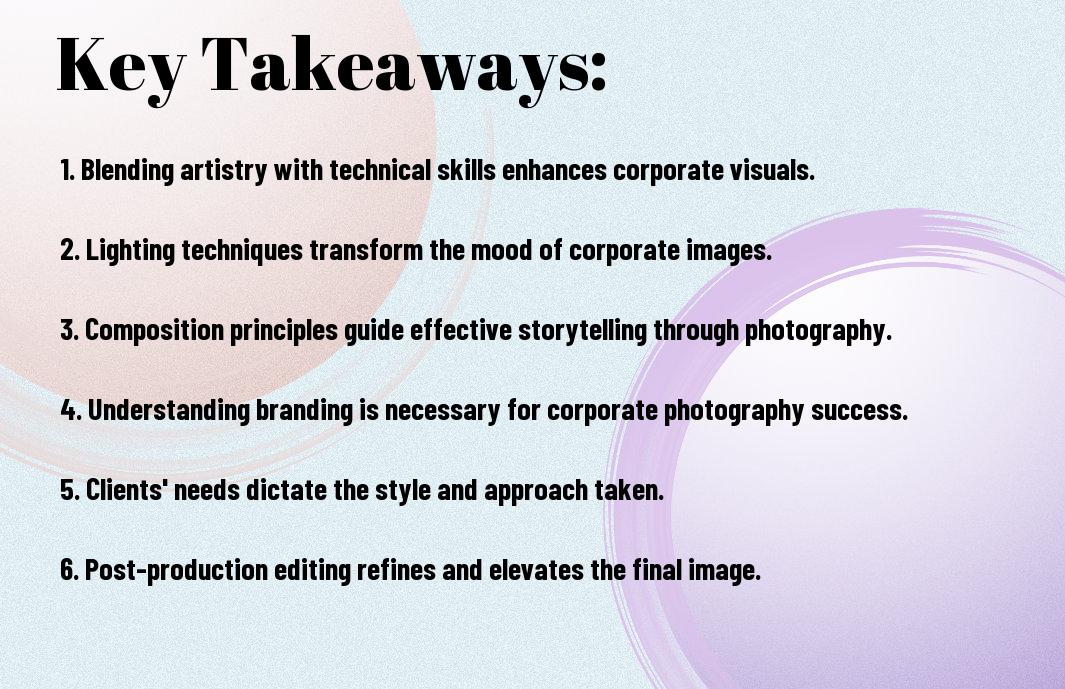
There’s a fascinating world behind the lens of corporate photography that marries technical skill with artistic vision. In this blog post, you will gain valuable insights into the techniques and strategies that make corporate photography not just a job, but an necessary tool for businesses to communicate their brand identity effectively. From understanding lighting and composition to grasping the nuances of corporate culture, you’ll discover how to enhance your visual storytelling and make a significant impact in your professional endeavors.
The Evolution of Corporate Photography
The journey of corporate photography is a fascinating blend of art and innovation, reflecting the changing dynamics of business communications. As you research into its evolution, you’ll discover how visual storytelling has transformed from simple documentation to a pivotal element of brand identity and corporate culture.
Historical Context
On examining the historical context, you’ll find that corporate photography originated in the late 19th century as businesses sought to portray a professional image. Initially limited to formal portraits and industrial settings, it gradually evolved to encompass a wider array of subjects and themes, aligning closely with marketing strategies and public relations.
Technological Advancements
Against a backdrop of rapid technological advancements, corporate photography has undergone significant transformation. From the shift to digital photography to the rise of high-quality smartphone cameras, these innovations have made capturing compelling images more accessible than ever.
Corporate photography now leverages advanced equipment and software, allowing you to produce high-resolution images that showcase your brand effectively. The integration of social media has also played an important role, pushing you to create visually engaging content that resonates with your audience. With tools like drones and 360-degree cameras, you can now explore new dimensions in your photography, providing unique perspectives that elevate your corporate identity. These technological advancements have not only improved the quality of your images but also expanded the ways in which you can convey your corporate narrative.
The Art of Composition
You have the power to transform ordinary corporate moments into compelling visual stories through effective composition. By carefully considering the arrangement of elements within your frame, you can enhance the viewer’s engagement and convey your brand’s message more vividly. Understanding the principles of composition enables you to create balanced and striking images that resonate with your audience, taking your corporate photography to the next level.
Framing Techniques
With various framing techniques, you can draw attention to your subject and create a sense of depth in your images. Techniques such as using natural frames like windows or doorways can encapsulate your subject, directing the viewer’s focus while adding context. Experimenting with these methods will enhance the storytelling aspect of your photographs and help to emphasize key elements within your corporate visuals.
Use of Color and Light
For impactful corporate photography, the deliberate use of color and light is vital in evoking the right emotions and setting the tone of your images. Colors can convey feelings; for instance, blues often represent trust, while reds can evoke excitement. Proper lighting can create mood and highlight details that contribute to your overall composition.
Due to the interplay between color and light, adjusting these elements dramatically affects how your audience perceives your image. Natural light can give a softer feel, perfect for candid shots, while artificial lighting can provide more control over the scene’s atmosphere. By experimenting with color temperatures and light sources, you can achieve the desired effect, enhancing the overall visual impact of your corporate photography.

The Science of Photography
All great photography combines artistic vision with scientific principles. Understanding light, exposure, and the intricacies of camera mechanics allows you to capture stunning images that resonate with your audience. The balance of these elements brings clarity, detail, and emotion to your corporate photography, ensuring you convey the right message effectively and professionally.
Camera Settings and Equipment
Between your camera’s settings and the equipment you choose, every decision influences the final outcome of your photos. Familiarizing yourself with aperture, shutter speed, and ISO helps you manipulate light and depth-of-field effectively. Moreover, choosing the right lens and supporting gear can significantly enhance your ability to capture the essence of the corporate environment.
Image Processing and Editing
On capturing your images, the journey doesn’t end; image processing and editing play a vital role in refining your photographs. Post-production allows you to enhance colors, adjust lighting, and ensure clarity, transforming raw images into professional-quality visuals that stand out.
A solid understanding of image processing techniques is vital for presenting your corporate photography in the best light. Software tools enable you to manipulate contrast, remove distractions, and sharpen details, allowing your images to reflect the professionalism of your brand accurately. Fine-tuning these elements in post-production ensures that your visuals not only capture attention but also convey your intended message effectively, highlighting the unique aspects of your corporate identity.

Capturing Corporate Culture
Unlike many other forms of photography, capturing corporate culture requires a deep understanding of the organization’s values, beliefs, and work environment. It’s vital to reflect the unique identity of the company through your images, providing potential clients and employees with an authentic glimpse into what makes the organization tick. By showcasing your workplace dynamics and team interactions, you can effectively communicate the essence of your corporate culture.
Candid vs. Posed Shots
Between the two approaches, candid shots often reveal more genuine emotions and interactions, making your corporate imagery relatable and engaging. Posed shots may offer a polished style but can sometimes lack the warmth and authenticity that are vital in portraying a company’s true spirit. Balancing both styles can help create a comprehensive narrative of your workplace.
Storytelling Through Imagery
Across your corporate photography, storytelling plays a significant role in connecting with your audience. Using images that depict real moments and interactions can engage viewers on a deeper level, bringing them into the world of your organization.
Through thoughtful composition and strategic framing, you can create a visual narrative that embodies your corporate ethos and highlights the passion of your team. Every photograph can tell a story, whether it’s capturing a brainstorming session or celebrating a milestone. By focusing on key elements that represent your brand, you can craft a compelling visual journey that resonates with clients and employees alike, enhancing your corporate identity.

Best Practices for Corporate Photography
Many factors contribute to successful corporate photography, including preparation and execution. Ensuring that your images are a reflection of your brand identity requires careful planning and a keen understanding of your subjects. In this chapter, you will discover best practices that elevate your photography, engage your audience, and enhance your corporate image.
Planning the Shoot
Around every successful corporate shoot lies meticulous planning. Start by defining your objectives and identifying the key messages you want to communicate through your images. Consider the location, lighting, and equipment, while also developing a shot list that outlines the types of photos necessary. This preparation will streamline the shooting process and achieve your desired outcome more effectively.
Working with Subjects
Practices of effectively engaging with your subjects can significantly impact the overall quality of your photographs. Establishing a comfortable environment is vital for capturing authentic expressions and emotions. Take the time to get to know the individuals you’ll be photographing, as a strong rapport encourages them to relax and showcase their personalities.
The more you understand your subjects, the better your results will be. Providing clear directions and offering positive feedback can help your subjects engage naturally with the camera. Remember to communicate the purpose of the shoot and how their participation contributes to the overall narrative. This connection will not only enhance the quality of your images but also promote confidence and authenticity in their portrayal.
Legal and Ethical Considerations
Once again, navigating the legal and ethical landscape is vital in corporate photography. You must be aware of the laws that govern the industry, particularly concerning copyright, consent, and the use of images. When engaging in photography for corporate purposes, ensuring that all parties involved are informed and compliant with relevant regulations is vital for fostering trust and protecting your brand’s reputation.
Copyright and Usage Rights
Along with understanding your creative vision, you need to grasp copyright and usage rights associated with your images. When capturing photographs, you hold the copyright, which gives you the exclusive right to reproduce, distribute, and display your work. It’s vital to clarify usage rights with clients to outline how and where your images can be distributed, thus avoiding potential legal issues.
Privacy and Consent
Beside copyright considerations, the aspect of privacy and consent cannot be overlooked in your photography practice. Gaining explicit permission from individuals before capturing their likeness is not only respectful but also a legal requirement in many cases. This consideration forms a vital part of maintaining ethical standards in corporate photography.
Indeed, prioritizing privacy and consent is not just about compliance; it’s about building respect and trust with the subjects of your photography. Always ensure that you have signed model release forms when photographing individuals, particularly in corporate settings. This practice not only protects you legally but also allows your subjects to feel valued and respected, enhancing the overall experience and relationship with your clients. Your professionalism in these matters can significantly impact your reputation in the industry.
Final Words
With this in mind, understanding the art and science of corporate photography empowers you to convey your brand’s narrative effectively. By mastering composition, lighting, and storytelling techniques, you can create impactful visuals that resonate with your audience. As you refine your skills, you’ll transform corporate imagery into an imperative asset that not only enhances your professional identity but also fosters deeper connections with clients and stakeholders. Embrace the nuances of this craft, and watch as your corporate photography elevates your business presence in the marketplace.






Leave a Reply
You must be logged in to post a comment.