
Over the years, selecting the right photographer for your needs has become vital, whether you’re planning a wedding, a portrait session, or a corporate event. To ensure you make the best choice for your vision and budget, it’s important to ask the right questions. This blog post will guide you through the top five questions you should pose to potential photographers, helping you gain clarity on their style, experience, and overall fit for your project. With the right information, you’ll be better prepared to make an informed decision.
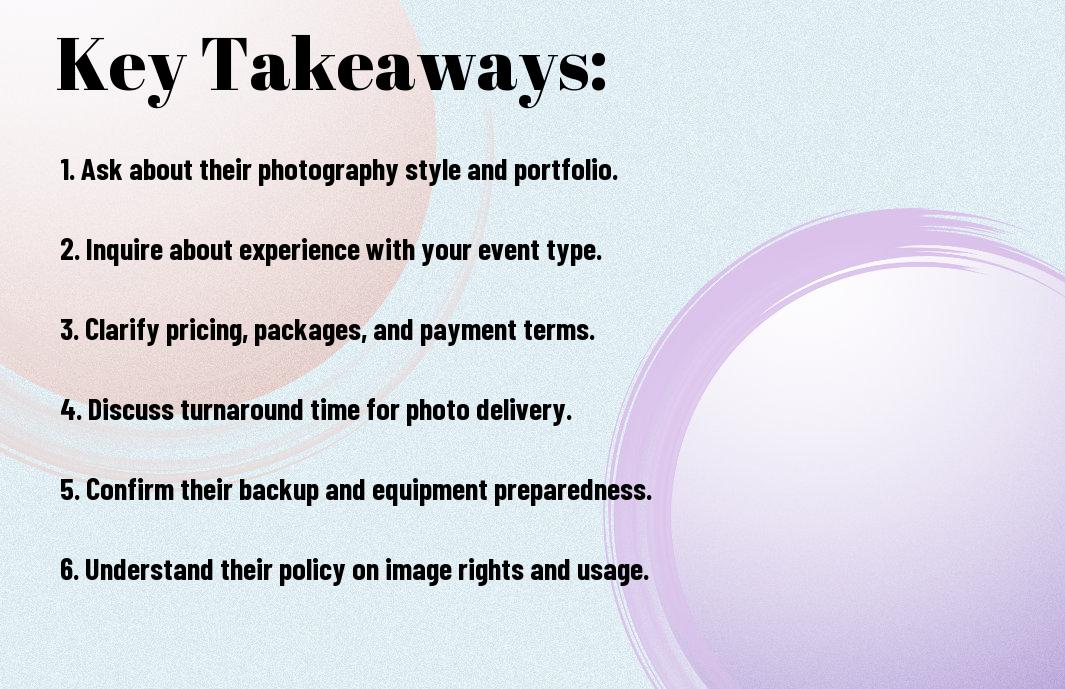
Capturing the Essence: What’s Your Photography Style?
Understanding a photographer’s unique style is imperative in determining if they can effectively capture the moments that matter to you. Each photographer has a distinct approach that influences the mood, composition, and storytelling of their images. Whether they lean towards vibrant colors, dramatic contrasts, or a candid documentary style, knowing their aesthetic will help you find the right match for your vision.
Defining Artistic Vision and Technique
Artistic vision and technique vary significantly between photographers, influencing how they interpret and present their subjects. Some may specialize in posed portraits with meticulous detail, while others might thrive in the spontaneity of candid shots. Understanding these differences allows you to gauge if their artistic direction resonates with your expectations.
Importance of Matching Client Aesthetics to Photographer’s Portfolio
Your personal taste should align with the photographer’s portfolio to ensure the final product reflects your vision. Evaluating their past work gives insight into whether their style complements your aesthetic preferences.
Focusing on matching your aesthetics with a photographer’s portfolio can significantly impact how your photos turn out. If you love soft, airy images but choose a photographer who favors dark, moody tones, the results may not capture the essence you desire. Reviewing their previous work not only highlights their signature techniques but also unveils the nuances of their storytelling ability. Pay close attention to color palettes, composition, and the emotions portrayed in their images to ensure a seamless alignment with your ideals.
Behind the Lens: What Equipment Do You Use?
Asking about the photographer’s gear provides insight into their level of professionalism and adaptability. A well-equipped photographer usually possesses high-quality cameras, lenses, and accessories that suit different shooting conditions. It’s not just about the brand of equipment, however; understanding how they utilize their gear in various situations can reveal their expertise and creativity in capturing stunning images.
Understanding Camera Gear and Its Impact on Quality
Your choice of a photographer can significantly influence the quality of your images, and their equipment plays a massive role in this. Professional-grade cameras often have larger sensors, superior low-light capabilities, and a wider dynamic range, all contributing to sharp, vibrant photographs. When you inquire about the type of camera and lenses they use, you gain insight into their creative potential and technical expertise.
The Role of Lighting and Accessories in Photographic Success
Beyond cameras, lighting equipment and accessories greatly affect your images’ overall impact. Photographers often use external flash units, reflectors, and diffusers to control light and shape shadows, enhancing the mood and depth of their shots. The right tools can transform an ordinary scene into something extraordinary, making this an important aspect of their toolkit.
Your photographer’s approach to lighting can elevate your images dramatically. For instance, using softboxes allows for more flattering portraits by diffusing harsh light, while reflectors can highlight details and textures that might otherwise be lost. If they own accessories like drones or specialized lenses for macro photography, it indicates a commitment to delivering diverse and dynamic compositions that cater to your specific needs and preferences.
Crafting Your Story: How Do You Approach a Shoot?
Every photographer has a unique methodology when it comes to crafting compelling narratives through their lenses. Their approach to a shoot often reflects their understanding of the subject matter, the environment, and your vision. By discussing their creative process, you can gain insights into how they plan to capture your story, whether through candid moments, staged portraits, or an artistic blend of both. Asking about their approach ensures they will align with your expectations and help portray the essence of your special event or project.
The Importance of Pre-Production Planning
Effective pre-production planning can significantly enhance the outcome of your shoot. Discussing logistics, shot lists, and potential locations with the photographer ensures everyone is on the same page. This phase allows you to clarify your objectives and gives the photographer an opportunity to prepare for any challenges that may arise. A well-structured plan leads not only to efficiently executed shots but also helps to keep the session’s creative flow intact, maximizing both your time and investment.
Flexibility and Adaptability During a Session
A successful shoot often involves more than strict adherence to a pre-set plan. Situations may change, requiring the photographer to pivot in response to lighting, changing weather, or spontaneous moments. Their ability to adapt not only impacts the quality of the photographs but also your overall experience. Engaging with a photographer who thrives in dynamic settings can elevate the creativity of the shoot, allowing for unexpected yet beautiful moments to emerge. You want someone who can seamlessly adjust their approach while still capturing the essence of your vision.
Consider how vital it is for your photographer to be prepared for the unforeseen. Whether that means improvising poses, adjusting camera settings in changing light, or seizing candid moments, flexibility can lead to unexpected artistic outcomes that enhance your collection. Photographers often draw from their experience in similar settings, enabling them to make quicker decisions that still align with your vision. This adaptability ensures that every aspect of your session is utilized to its fullest potential, resulting in a more comprehensive representation of the story you want to tell.
Time Management: When Can We Expect the Final Images?
Determining the timeline for receiving your final images can significantly impact your expectations and planning. You should clarify this upfront to align your schedule and any subsequent events around the delivery. A good photographer will have a clear process that allows them to balance their workload while ensuring quality results, so asking about their average turnaround time ensures you avoid any surprises post-shoot.
Typical Turnaround Times and their Implications
Most photographers typically deliver edited images between two to six weeks after the shoot, depending on their workload and the complexity of the project. Knowing this timeframe helps you plan for any announcements, reveal parties, or other events that may hinge on your images being ready.
Process of Reviewing and Finalizing Deliverables
The review process can vary but often includes a selection of proofs for you to choose from. This stage is vital in custom-tailoring your final selection, ensuring your vision is brought to life. Understanding how many rounds of edits you can expect sheds light on the collaborative nature of the work.
During the reviewing and finalizing stage, you’ll typically review a selection of images before the final edits are applied. Photographers often provide a link to a gallery where you can choose your favorites, potentially offering several rounds of edits if needed. It’s your opportunity to provide feedback and make adjustments, from cropping to color corrections, to ensure the final product matches your expectations perfectly. Establishing clear communications and timelines during this process can sustain excitement and lead to an even more satisfying outcome.
Unveiling the Cost: What’s Included in Your Rates?
Your budget can significantly influence which photographer you choose, so understanding the cost structure upfront is vital. Photographers often provide various packages that cover different aspects of their services, from the number of shooting hours to the delivery of edited photos. Make sure to clarify what is included, such as the number of final images, any travel expenses, printing rights, and any additional services like an engagement shoot or albums.
Breakdown of Pricing Structures and Packages
Photographers typically offer a range of pricing packages tailored to different needs and events. You might find basic packages including limited shooting hours and digital files, while premium options may encompass full-day coverage, high-quality prints, and personalized albums. Request detailed information on each package, ensuring you know what each tier offers, helping you select one that best fits your vision and budget.
Hidden Costs and Add-Ons to Consider
Some photographers might have additional costs not outlined in their initial pricing packages. These can include travel fees for locations outside a specified radius, charges for extra editing, or costs for additional prints and products. Asking upfront about any possible hidden fees will save you from unexpected expenses at the end of your project.
Explore details related to the hidden costs and possible add-ons, such as overtime charges if your shoot runs longer than planned or expenses for additional personnel like assistants. Inquire about upgrading your package for extra features, like same-day edits or extended coverage. Understanding these nuances allows you to assess the total investment, ensuring that you’re equipped to make informed decisions without unwanted surprises later. Take the time to dig deeper into these aspects so you can evaluate the complete value of your chosen photographer’s services.
Making It Personal: How Do You Handle Client Relationships?
A strong client relationship can enhance the photography experience and lead to stunning results. Understanding how a photographer approaches interpersonal connections reveals insight into their professionalism and adaptability. You’ll want to know how they ensure your comfort during shoots and how they encourage collaboration. A photographer who prioritizes personal interactions will likely deliver images that truly resonate with your vision and story.
Communication Style and Client Feedback
Consider a photographer’s communication style as a reflection of their working dynamic. Do they prefer face-to-face meetings, or are they more comfortable communicating through emails and texts? Clarity in communication fosters an effective collaboration and allows you to provide valuable feedback throughout the process. Requesting examples of past client interactions can give you an insight into how they handle suggestions and preferences.
Importance of Trust and Rapport in Photography Work
Establishing trust and rapport is necessary for capturing authentic moments. When you feel comfortable with your photographer, the resulting images tend to be more natural and genuine. Photographers experienced in building relationships know how to approach sensitive topics and moments, ensuring that you feel supported rather than pressured. A connection built on trust often leads to a more relaxed environment, allowing you to express yourself freely in front of the lens.
Exploring the importance of trust further illuminates how it impacts the photographic journey. A photographer who builds rapport not only puts you at ease but also encourages creative collaboration. Their ability to connect with you facilitates open dialogue, where you can voice your ideas, concerns, and preferences. For instance, if you have specific poses or styles in mind, a trusting relationship makes it easier for you to communicate these details, resulting in photographs that align closely with your vision. This partnership can transform a simple session into a memorable event, yielding images that you will cherish for years to come.
To wrap up
With this in mind, asking the right questions before hiring a photographer can significantly impact your experience and the final results. By understanding their style, availability, pricing, and how they handle post-production, you ensure that your vision aligns with their expertise. Don’t hesitate to inquire about their past work and client testimonials to gauge their reliability. Taking the time to clarify these aspects will empower you to make an informed decision, leading to a smoother, more successful photography experience tailored to your needs.

Leave a Reply
You must be logged in to post a comment.