


Over your journey into wedding photography, having the right gear is fundamental to capturing those precious moments beautifully. This blog post will guide you through the crucial items every beginner should include in their kit, ensuring you are well-prepared for any situation that arises on the big day. From the must-have camera equipment to crucial accessories, understanding these tools will help you elevate your photography skills and deliver stunning results that clients will cherish for a lifetime.

Key Takeaways:
- Invest in a quality camera body: A solid DSLR or mirrorless camera is vital for capturing high-resolution images during weddings.
- Choose versatile lenses: A fast prime lens (like a 50mm) for portraits and a zoom lens (like a 24-70mm) for flexibility in various settings are important additions.
- Utilize external lighting: A speedlight or off-camera flash can help illuminate indoor venues and enhance low-light conditions.
- Don’t overlook backup gear: Having extra memory cards, batteries, and a second camera body can prevent potential mishaps.
- Consider additional accessories: A sturdy tripod, lens cleaning kit, and camera bag for organization can enhance your workflow and protect your equipment.
The Fundamental Gear: Camera Bodies That Capture Magic
Your choice of camera body can profoundly impact your wedding photography. A solid camera body is the backbone of your kit, allowing you to capture high-quality images that tell the story of the day. Whether opting for a DSLR or a mirrorless camera, understanding their unique advantages helps you make an informed decision that suits your style and needs.
Choosing the Right Camera Type: DSLR vs. Mirrorless
DSLRs offer a vast ecosystem of lenses and accessories, while mirrorless cameras are generally lighter and provide advanced features like faster autofocus and silent shooting. The choice between them depends on your shooting preferences, such as whether you prioritize compactness or lens versatility in your wedding photography.
Key Features for Wedding Photography: Megapixels, ISO Range, and Autofocus
Pay attention to specific features when selecting your camera body to ensure it meets the demands of dynamic wedding environments. Factors such as megapixels, ISO range, and autofocus capabilities directly affect your ability to capture stunning moments in variable lighting and fast-paced situations.
- Megapixels: Aim for at least 20MP for quality enlargements.
- ISO Range: Look for cameras with a high ISO range (e.g., 100-6400) for challenging lighting.
- Autofocus: A fast and reliable autofocus system with multiple points for accurate tracking.
Equipped with the right features, your camera can efficiently handle the myriad of scenarios you’ll encounter on a wedding day. High megapixels ensure stunning detail in prints, while a vast ISO range allows for beautiful low-light shots during receptions. A dependable autofocus system helps keep crucial moments in perfect focus, enabling you to capture the magic effortlessly. Thou shall choose wisely to elevate the storytelling of your images.
Essential Lenses: The Eye of the Photographer
Your lens selection will define the aesthetic of your wedding images. The right lenses enhance your ability to capture breathtaking moments, from the grand ceremony to candid interactions. Each type of lens serves a distinct purpose, enabling you to adapt to varying scenarios throughout the event. Understanding the differences between prime and zoom lenses is vital in creating a versatile kit that meets your specific needs.
Prime Lenses for Portraits: Why Speed Matters
Prime lenses offer sharp images and stunning bokeh, making them ideal for capturing intimate portraits. The typical f/1.8 or f/1.4 aperture allows for excellent low-light performance, necessary during evening ceremonies. This ability to create a creamy background ensures that your subjects stand out beautifully, which is paramount when photographing the couple against festive backdrops.
Zoom Lenses for Versatility: The Best Options for Wedding Events
Zoom lenses excel in providing flexibility, allowing you to adapt to changing scenes without the need for constant lens swaps. Ideal for weddings, a lens like a 24-70mm f/2.8 or a 70-200mm f/2.8 guarantees you won’t miss key moments—from wide-angle shots of the venue to close-ups of emotional reactions. These versatile tools help in navigating various settings, ensuring you capture the essence of the day with ease.
A well-chosen zoom lens is often your best ally during the hustle and bustle of a wedding. For instance, the Canon 24-70mm f/2.8 is celebrated for its fast focusing and exceptional image quality, allowing you to shoot both landscapes and portraits effectively. Meanwhile, the 70-200mm f/2.8 offers an incredible compression effect for emotional moments, keeping you at a distance while zooming in on the couple’s tender interactions. This adaptability makes zoom lenses indispensable for any wedding photographer aiming for a comprehensive portfolio without missing a beat.
Lighting Equipment: Illuminating the Moment
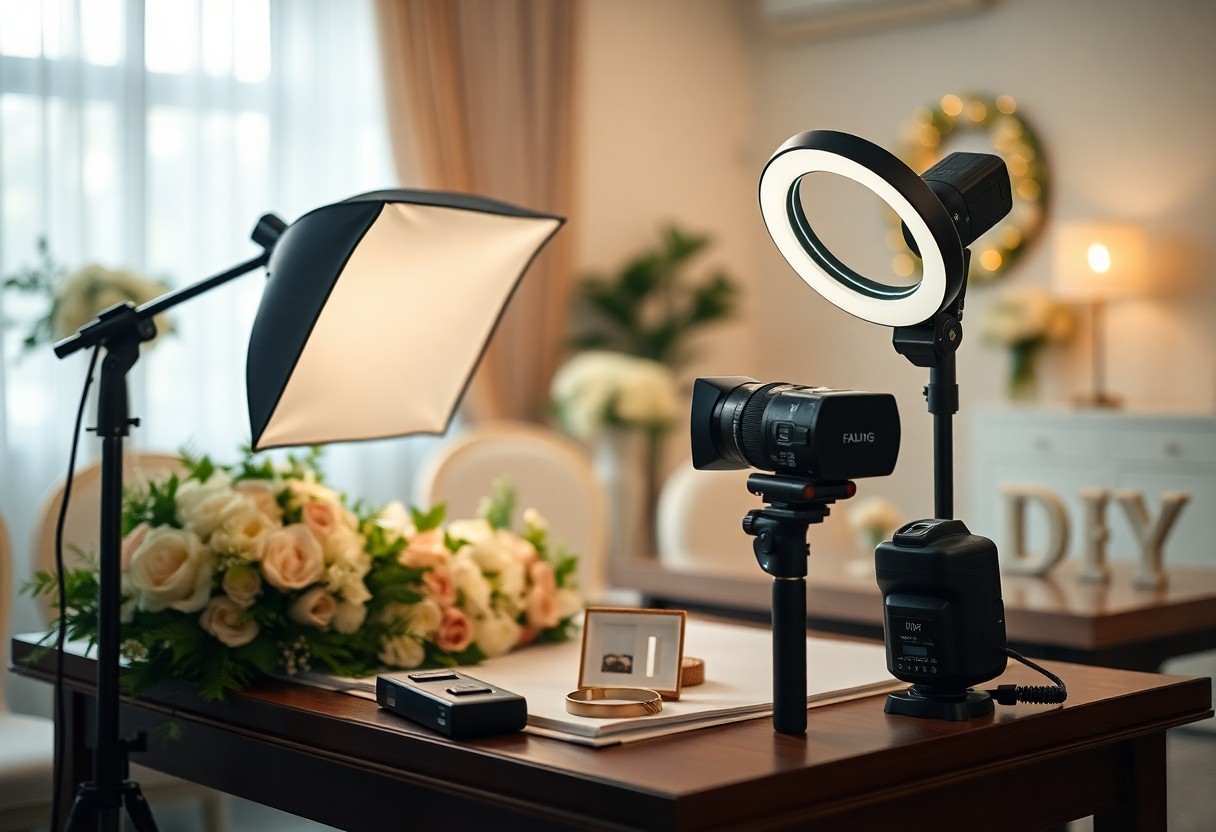
Every wedding has its own distinct lighting challenges, and having the right equipment can make all the difference in capturing stunning images. Different settings and times of day can create a vast array of lighting situations, from soft and romantic to bright and vivid. Mastering these conditions requires not just your camera, but also smart investments in lighting gear that can help elevate your photography. Whether you’re indoors with dim lighting or outdoors under a blazing sun, being equipped with flexible lighting tools is key to documenting every cherished moment beautifully.
On-Camera Flash vs. Off-Camera Lighting: What Works Best?
You’ll find that on-camera flash offers convenience and is ready to use in a pinch, making it ideal for quick snapshots. However, off-camera lighting provides greater flexibility and creativity. By positioning external flash units away from your camera, you can create dynamic shadows, eliminate harsh light spots, and capture your subjects in a more flattering way. Each option has its advantages, but for a more polished and professional look, learning to work with off-camera lighting can take your wedding photography to the next level.
Light Modifiers: Softboxes, Diffusers, and Reflectors Explained
Using light modifiers allows you to control and fine-tune the light that illuminates your subjects. Softboxes diffuse harsh light into a softer, more even glow, which is crucial for flattering portraits. Diffusers, similar in function, can be placed directly on your flash or in front of your subjects to minimize shadows. Reflectors bounce light back onto your subjects, filling in shadows and enhancing the overall composition. Equipped with these tools, your ability to mold light can dramatically improve the emotional impact of your wedding photographs.
Softboxes typically come in various shapes and sizes, making them suitable for different environments—from intimate indoor ceremonies to expansive outdoor receptions. They soften the light and wrap it around your subject, which is vital for avoiding unflattering shadows, particularly on faces. Diffusers, whether attached to your existing flash or used in conjunction with natural light, help to create a dreamy atmosphere, ideal for those romantic candid shots. Reflectors, often overlooked, are a budget-friendly way to manipulate light on the fly; they come in multiple colors, allowing you to shift the tone of your images effortlessly. Overall, diversifying your lighting setup with these modifiers enables you to tackle varied scenarios, guaranteeing beautiful results regardless of the conditions.

Beyond the Basics: Accessories That Elevate Your Shots
Enhancing your wedding photography goes beyond the necessary camera gear. Cleverly chosen accessories can elevate your images, offering unique angles, extra stability, and additional peace of mind. From sturdy tripods to backup storage solutions, these tools will ensure you capture every emotion, detail, and moment of the day, resulting in a stunning visual story that reflects the couple’s journey. Elevate your craft with thoughtful add-ons that align with your photographic style.
Tripods and Monopods: Stability and Fluidity in Movement
Using a tripod or monopod delivers much-needed stability for your shots, especially in dim lighting or while using longer exposure times. Tripods hold your camera steady, letting you focus on composition without worrying about shake, while monopods provide a versatile solution for quick movements during events. These tools enable you to achieve sharp results, particularly for group portraits or low-light settings where precision is key.
Memory Cards and Batteries: Never Miss a Moment
Packing extra memory cards and batteries ensures that your creativity flows uninterrupted. High-capacity cards allow you to shoot in RAW without fear of running out of space, while spare batteries cover you through long days filled with events and celebrations.
An unexpected power drain or a full card can spell disaster during once-in-a-lifetime moments, such as the couple’s first kiss or emotional speeches. Investing in high-performance, high-speed memory cards means you can shoot without lag and handle larger image files efficiently. Reliable, fast cards enable you to shoot continuously, producing quality images that capture the essence of the day without the dreaded pause for swapping equipment. As a rule of thumb, bringing at least two or three extra batteries and memory cards can save the day, letting you stay focused on the action unfolding in front of you.
Preparing Your Kit: The Importance of Packing Strategically
Packing your photography kit strategically sets you up for success on the big day. Prioritize your gear based on the wedding timeline, ensuring that the vitals are accessible and organized. Consider the venues and lighting conditions you will encounter, and pack accordingly. An efficient kit allows you to operate smoothly, minimizing the time spent searching for equipment and maximizing your focus on capturing unforgettable moments.
Organizing Your Photography Bag for Quick Access
Use a well-structured bag with designated compartments to keep your gear organized. Each slot should hold specific items—lenses, batteries, and memory cards—allowing you to grab what you need without rummaging through your bag. Color-coding or labeling compartments can also boost your efficiency, letting you quickly identify and access necessary tools, which is especially helpful during fast-paced moments.
Backup Plans: Emphasizing Reliability on the Big Day
Having a solid backup plan ensures that equipment issues won’t derail your wedding coverage. Bring extra gear, such as a secondary camera body, additional lenses, and extra batteries to handle any unexpected situations. Consider including backup flash units, memory cards, and even a portable charger for your devices. This preparedness will give you peace of mind, allowing you to focus on capturing special moments without worrying about equipment failures.
On the wedding day, the likelihood of unexpected challenges always looms. If your primary camera malfunctions or your lens gets damaged, having a second camera and extra lenses can save the day. Statistically, about 20% of photographers experience gear failures during important events, emphasizing the need for redundancy. A backup plan not only protects your workflow but also reassures clients that they can rely on you for beautifully captured memories, even when things go awry.
Final Words
Conclusively, as you launch on your journey into wedding photography, equipping yourself with the important gear is vital for ensuring stunning outcomes. Your kit should include a reliable camera body, a variety of lenses for different settings, a sturdy tripod, and dependable lighting equipment. Don’t overlook the importance of extra batteries and memory cards to capture every moment. With the right tools at your disposal, you’ll be ready to create beautiful, lasting memories for couples on their special day.
FAQ
Q: What are the basic camera equipment needed for wedding photography?
A: For wedding photography, a reliable DSLR or mirrorless camera is imperative for capturing high-quality images. You will also need a versatile lens, such as a 24-70mm f/2.8, to handle various shots during the ceremony and reception. In addition, a sturdy tripod can aid in stabilizing your shots during low-light conditions, while extra memory cards and batteries are indispensable to ensure you don’t run out of storage or power during the event.
Q: Are external flash units important for wedding photography?
A: Yes, an external flash unit is highly beneficial for wedding photography. Built-in camera flashes may not provide the best lighting and can lead to unflattering results. An external flash allows you to control the lighting more effectively and can be bounced off walls or ceilings to produce softer, more natural-looking light. Additionally, having a diffuser can help soften the flash, making it even more effective for creating beautiful images.
Q: Should beginners invest in a light meter for wedding photography?
A: While a light meter can be helpful, it may not be necessary for every beginner. Many modern cameras have built-in metering systems that can accurately measure light levels. However, if you want to ensure precise exposure settings or shoot in challenging lighting conditions, a handheld light meter can be a helpful tool. Beginners should focus on mastering their camera’s metering capabilities first before considering additional equipment.
Q: How important is post-processing software in wedding photography?
A: Post-processing software is an important part of the wedding photography workflow. Programs like Adobe Lightroom and Photoshop offer powerful tools for editing images, correcting colors, and retouching photos. Even the best photographers rely on post-processing to enhance their work, so having access to these software programs, along with a good understanding of how to use them, can significantly improve the final presentation of your wedding photos.
Q: What accessories should a beginner wedding photographer consider adding to their kit?
A: In addition to the core camera gear, a beginner wedding photographer should consider adding several accessories to their kit. These may include a sturdy camera bag to keep gear organized, cleaning kits to maintain lens and sensor cleanliness, and a lens hood to reduce lens flare. Additionally, using a reflector can help manipulate natural light, while a notebook for jotting down important details or lists can be helpful for organizing the day’s events. All these items can help enhance your wedding photography experience.
Leave a Reply
You must be logged in to post a comment.