

Over time, your portfolio becomes a reflection of your skills, creativity, and professionalism, serving as a powerful tool in establishing your reputation. An eloquent portfolio not only showcases your best work but also communicates your unique style and the value you bring to potential clients. By presenting your achievements and capabilities compellingly, you can consistently attract new clients while reinforcing your standing in your industry. In this post, we will explore how to create a portfolio that resonates with your audience and elevates your brand.

The Importance of an Eloquent Portfolio
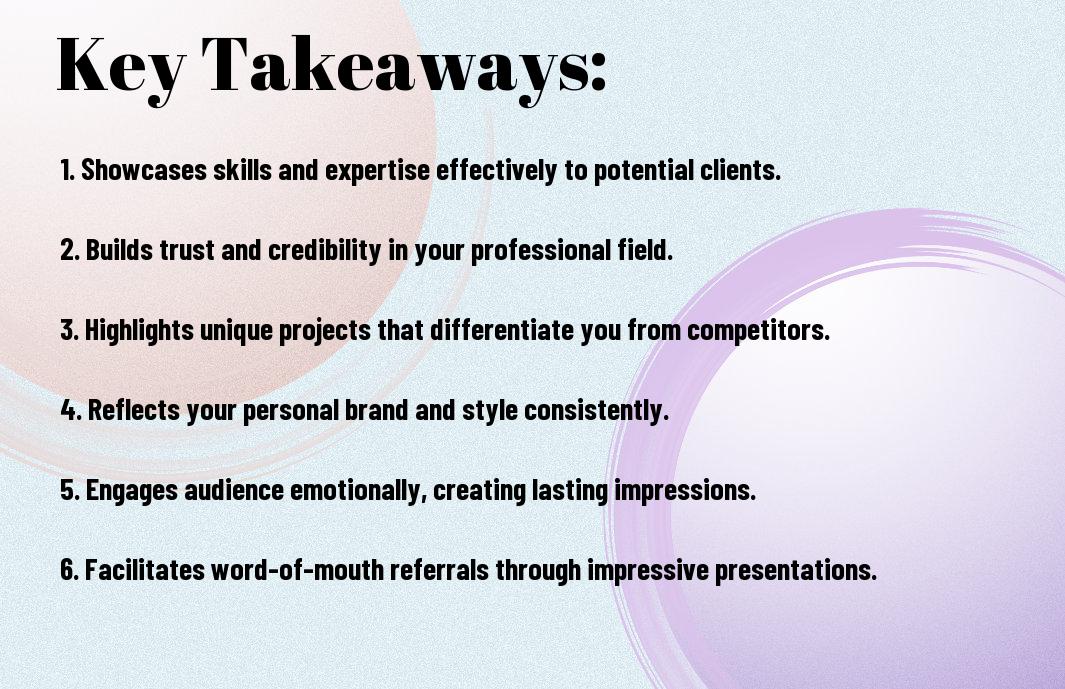
Your portfolio serves as a powerful testament to your skills and expertise, shaping how potential clients perceive you. A well-crafted portfolio not only showcases your work but also highlights your unique style and approach. By presenting a cohesive and compelling narrative of your experience, you create a lasting impression, making it easier for clients to see the value you bring to their projects.
Defining Eloquent Portfolios
Behind every brilliantly eloquent portfolio lies a carefully curated selection of work that reflects your identity and professionalism. It transcends mere presentation, evolving into a narrative that connects your skills with the needs of potential clients. An eloquent portfolio speaks to your audience, clearly illustrating who you are and what you can deliver.
Key Elements of an Effective Portfolio
Behind an effective portfolio are crucial components that enhance its impact—varied work samples, clear organization, and personal branding. Your presentation should weave together your diverse experiences while allowing your distinct voice to shine through. Clients seek not just outcomes but the artist’s touch behind them, making each element significant in establishing a meaningful connection.
With a strategic selection of projects, an effective portfolio must also prioritize quality over quantity. Each piece included should exemplify your best work, demonstrating your range and adaptability. Clear labels and organized sections foster easy navigation, allowing viewers to appreciate your expertise without feeling overwhelmed. Incorporating an engaging personal bio adds depth, giving clients insight into your journey and creative philosophy. Finally, testimonials or case studies amplify credibility, showing potential clients tangible results from your previous collaborations.
Building a Strong Portfolio
It is necessary to create a strong portfolio that not only highlights your skills but also reflects your unique style and approach. A well-curated portfolio serves as a powerful marketing tool that can enhance your reputation in your chosen field. By thoughtfully selecting your best work and presenting it in a visually appealing manner, you can effectively communicate your expertise and attract potential clients consistently.
Curating Your Best Work
Among the many strategies to build a strong portfolio, curating your best work is fundamental. You should select pieces that not only showcase your abilities but also resonate with the type of clients you wish to attract. Aim for quality over quantity, and ensure each piece tells a story that emphasizes your skills and creativity.
Showcasing Versatility and Skill
Any potential client will appreciate a portfolio that demonstrates both versatility and a range of skills. By showcasing diverse work, you not only appeal to a broader audience but also underscore your adaptability in different projects. This ability to pivot and cater to various styles or requirements makes you a valuable asset in the eyes of prospective clients.
Strong portfolios often highlight the breadth of your capabilities, making it necessary to include different styles, techniques, and mediums in your work. Clients want to see that you can handle various challenges and deliver consistent quality, regardless of the specific demands of a project. By demonstrating your versatility, you reinforce the message that you are not only skilled but also an experienced professional who can meet their needs effectively.

The Role of Aesthetics in Portfolio Presentation
Many believe that the first impression of your portfolio can significantly impact how clients perceive your work. A visually appealing presentation can engage viewers and convey your attention to detail and professionalism. A well-curated aesthetic not only showcases your creativity but also makes it easier for potential clients to navigate through your projects, leading to a more positive engagement with your work.
Visual Design Principles
After taking into account the elements of visual design principles, you can effectively enhance your portfolio’s appeal. Focus on balance, contrast, alignment, and repetition to create a cohesive look. By utilizing these principles, your portfolio can communicate your skills more effectively, enabling potential clients to grasp your unique style at a glance.
User Experience and Accessibility
Between aesthetics and functionality, user experience and accessibility play a vital role in presenting your portfolio. It’s imperative that potential clients can easily navigate your work without feeling overwhelmed. An intuitive layout, clear navigation, and responsive design will ensure that your portfolio is user-friendly for people from diverse backgrounds and abilities.
It is important to prioritize user experience and accessibility to make your portfolio inclusive and easy to navigate. Consider implementing keyboard navigation options, alt text for images, and ensuring your design is mobile-friendly. By doing this, you allow all visitors—including those with disabilities—to engage with your work seamlessly, thereby increasing your chances of attracting a broader range of clients.
How a Portfolio Enhances Your Professional Reputation
For professionals looking to elevate their standing in their industry, a well-crafted portfolio serves as an indispensable tool to showcase your skills and accomplishments. By effectively highlighting your best work, a portfolio not only showcases your capabilities but also reinforces your commitment to excellence, positioning you as a reputable figure in your field. As potential clients and collaborators explore your portfolio, they gain insight into your qualifications and the value you can bring, ultimately enhancing your professional image.
Establishing Credibility and Trust
Establishing credibility and trust is imperative in attracting clients, and a portfolio enables you to do just that. By presenting prominent projects and real-world results in an organized manner, you demonstrate your reliability and expertise. Prospective clients are more likely to engage your services when they see tangible evidence of your past successes, making a strong case for the quality of your work.
Perception of Expertise
Among potential clients, your portfolio shapes their perception of your expertise. It offers a curated glimpse into your capabilities and accomplishments, serving as visual proof of your knowledge and skills. A compelling portfolio signals to clients that you possess the professional acumen required to meet their specific needs.
Reputation plays a significant role in how clients evaluate your expertise. When they encounter a portfolio filled with diverse projects, successful outcomes, and positive client testimonials, their confidence in your abilities strengthens. A strong portfolio can not only attract new clients but also elevate your status within your industry, leading to more opportunities and referrals. Ultimately, a well-assembled portfolio reflects your proficiency, fostering a sense of trust and elevating your standing as an expert in your field.
Attracting Clients Through Your Portfolio
After showcasing a well-crafted portfolio, you will find that attracting clients becomes a more streamlined process. Your portfolio acts as a bridge between your skills and potential clients, offering them a tangible representation of what you can achieve. By presenting your best work in an organized manner, you effectively communicate your expertise and style, making it easier for clients to envision the value that you can bring to their projects.
Target Audience Considerations
Target your portfolio to resonate with the specific demographic and industry segments you wish to attract. Understanding your audience’s preferences, pain points, and expectations will enable you to tailor your portfolio’s content, showcasing the most relevant projects that demonstrate your ability to solve their unique challenges.
Leveraging Portfolios in Marketing Strategies
At the same time, leveraging your portfolio in your marketing strategies can create numerous opportunities for client engagement. A well-promoted portfolio acts as a powerful marketing tool, attracting client inquiries through various channels, including social media, networking events, or online platforms.
It offers you the chance to highlight not only your completed projects but also your creative process and testimonials, further enhancing your credibility. Use your portfolio in presentations, share it on social media, and include it in your email outreach to reinforce your brand identity. Consistently updating your portfolio with fresh work allows you to stay relevant in a competitive market, ensuring that it reflects your evolving style and expertise that potential clients seek.

Maintaining and Updating Your Portfolio
Keep your portfolio fresh and relevant by regularly reviewing and refining its content. Update it with new projects, skills, or accomplishments to reflect your growth and versatility. An evolving portfolio showcases your commitment to staying current in your field, which can instill confidence in potential clients and collaborators.
Continuous Improvement and Feedback
By seeking feedback from peers and mentors, you can identify areas where your portfolio can improve. Constructive criticism helps you refine your work and presentation, ensuring that your portfolio consistently aligns with your goals and the expectations of your target audience.
Adapting to Market Trends
An effective portfolio must evolve in response to changing market demands. Regularly assess industry trends to ensure your showcased skills and projects are aligned with what clients are seeking. This adaptability not only enhances your relevance but also positions you as a proactive professional who understands the dynamic nature of your field.
And to stay ahead, consider researching emerging technologies, styles, or platforms relevant to your industry. Networking within professional groups and attending industry-related events can provide valuable insight into what is trending. By integrating these elements into your portfolio, you not only attract clients but also demonstrate your forward-thinking attitude, making you a desirable choice in a competitive market.
Final Words
With this in mind, an eloquent portfolio acts as a powerful testament to your skills and expertise, elevating your reputation within your industry. By showcasing your best work, you create a compelling narrative that resonates with potential clients, making them more likely to choose you over competitors. Consistently updating and refining your portfolio ensures that it reflects your current capabilities and achievements, fostering trust and confidence in your abilities. Ultimately, an impactful portfolio not only attracts clients but also establishes lasting relationships, leading to sustained success in your career.






Leave a Reply
You must be logged in to post a comment.