
You can elevate your photography skills by mastering the fundamentals that make images truly captivating. In this imperative guide, you will discover key techniques and principles that will empower you to enhance your compositions, utilize natural light effectively, and understand your camera settings. Whether you are a beginner or looking to refine your skills, these basics will provide you with the tools to create stunning photographs that tell a story. Let’s dive in and unlock the potential of your photography journey!
Understanding Your Camera
The journey to captivating photography begins with a thorough understanding of your camera. Familiarizing yourself with its features, modes, and functions allows you to effectively harness its full potential. Whether you’re using a DSLR, mirrorless, or smartphone camera, the more time you invest in learning about your equipment, the more control you’ll have over your shots, enabling you to create the stunning images you envision.
How-to Choose the Right Camera
While selecting a camera, it’s important to consider your specific needs and preferences. Assess your photography goals, budget, and the types of subjects you wish to capture, as this will help you narrow down options that align with your vision. Explore features like sensor size, lens compatibility, and user-friendliness to ensure you make an informed choice that suits your style.
Tips for Camera Settings
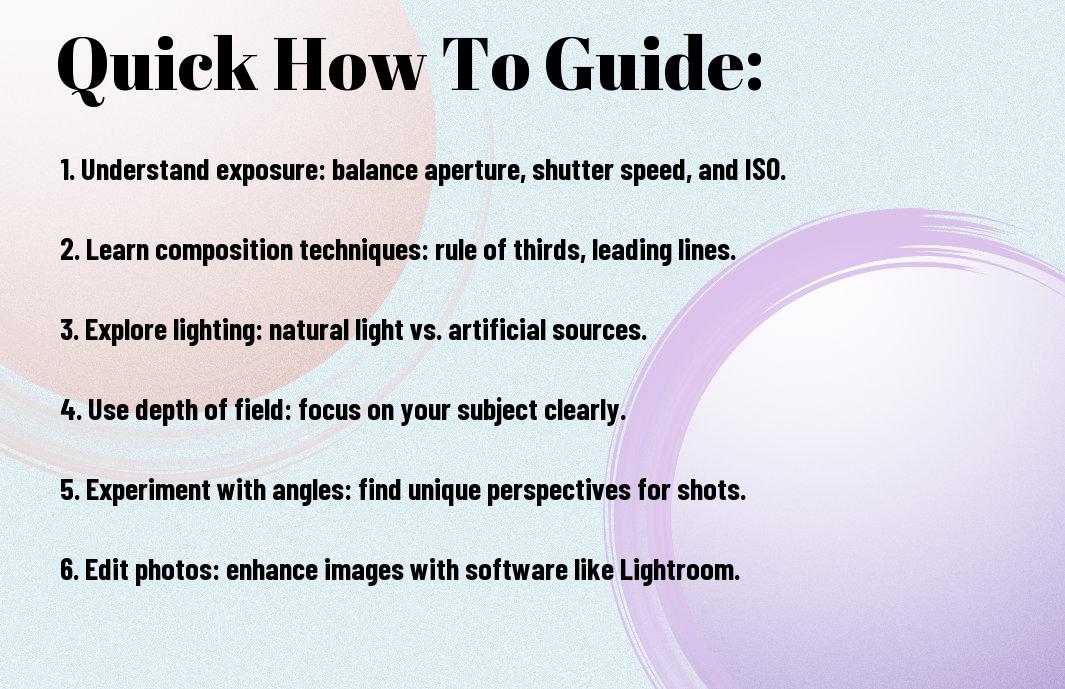
Clearly, adjusting your camera settings is vital for achieving the best results in your photography. Familiarize yourself with key settings, such as aperture, shutter speed, and ISO, to enhance your creative control. A few tips to optimize your camera settings include:
- Use aperture priority for good depth of field.
- Adjust shutter speed based on the motion of your subject.
- Set ISO according to lighting conditions to reduce noise.
Recognizing how each setting affects your images can elevate your photography, allowing you to adapt to various environments and themes.
Howto dive deeper into tips for camera settings will significantly transform your photography skills. Start experimenting with different combinations of shutter speed, aperture, and ISO to understand how they work together. Some additional tips include:
- Utilize manual mode for full creative control.
- Employ metering modes to analyze light accurately.
- Regularly practice shooting in varying conditions to gain confidence.
Understanding these fundamentals and practicing your skills will help you harness the power of your camera, enhancing your overall photography experience. Recognizing the importance of settings allows you to tailor your techniques and achieve stunning results in diverse shooting situations.
Composition Techniques
It is crucial to master composition techniques to elevate your photography from ordinary to extraordinary. A well-composed image captures the viewer’s attention, guiding their eyes and evoking emotion. By harnessing various techniques, you can create visual harmony and tell a more compelling story through your photos.
How-to Frame Your Shot
To frame your shot effectively, start by considering the elements within your scene. Look for natural frames such as doorways, windows, or branches that can draw focus to your subject. Adjust your perspective and angle to make those frames work for your composition, and don’t hesitate to explore different distances until you find the perfect balance.
Tips for Using Rule of Thirds
On your journey to mastering composition, applying the rule of thirds can significantly enhance your images. Imagine dividing your frame into a 3×3 grid, then placing key elements along these lines or at their intersections. This technique helps create balance and directs the viewer’s gaze through your photograph. Consider the following tips:
- Align your subject with intersecting lines for greater impact.
- Use the grid to position horizon lines and other landscapes appropriately.
- Experiment with off-center compositions to add interest.
Any photograph can benefit from this simple structure.
For instance, when photographing a sunset, position the horizon along the top or bottom third line instead of centering it. This not only provides a more dynamic composition but also allows the viewer to appreciate both the foreground and the sky. Additionally, you can use the rule of thirds for portraiture by placing the subject’s eyes along the top horizontal line. This technique engages viewers and creates a stronger connection with the subject. Remember:
- Experiment with different placements until you find your ideal balance.
- Use the rule as a guideline, not a strict rule; break it creatively when necessary.
- Analyze well-composed photographs to understand how others utilize this technique.
Any great photograph will become even better through thoughtful application of the rule of thirds.
Lighting Essentials
Unlike many beginners believe, lighting is the foundation of captivating photography, as it dramatically influences the mood, texture, and quality of an image. Mastering both natural and artificial lighting will elevate your photography skills, allowing you to create striking compositions that draw viewers in.
How to Utilize Natural Light
The best lighting for photography often comes from natural sources. Position your subject near windows or outdoors during golden hour—just after sunrise or before sunset—to capture soft, diffused light that enhances skin tones and adds depth to your photos.
Tips for Artificial Lighting
One effective way to enhance your photography is by mastering artificial lighting. Using various light sources can help you achieve the desired effect in your images. Here are some tips to consider:
- Use softboxes or diffusers to create even lighting.
- Experiment with the color temperature of your lights.
- Incorporate reflectors to bounce light on your subjects.
The right combination of techniques will improve your overall photography skills.
Understanding artificial lighting allows you to manipulate shadows and highlights for greater impact. Adjusting the intensity and angle of your lights can dramatically change the dynamics of your shot. Consider these pointers:
- Invest in adjustable LED lights for versatile lighting setups.
- Mix different light sources for unique effects.
- Practice creating silhouettes and high-contrast images.
The more you experiment with artificial lighting, the more you’ll gain confidence in your ability to create stunning images.
Subject Interaction
Keep in mind that engaging with your subjects enhances the storytelling potential of your photographs. Whether you’re working with people or animals, creating a comfort zone encourages natural expressions and poses. By considering their reactions and adjusting your approach accordingly, you can capture authentic moments that resonate with viewers.
How-to Build Rapport with Subjects
Even the most nervous subjects can be transformed into relaxed models through genuine interaction. Start by introducing yourself, asking open-ended questions, and actively listening to their thoughts. Building a connection helps subjects to feel valued and prompts them to express themselves freely, resulting in more dynamic photographs.
Factors Affecting Subject Posing
Even subtle elements can influence how your subjects pose. Consider the following factors before capturing an image:
- The subject’s comfort level
- The environment’s ambiance
- The purpose of the photograph
- Your personal style as a photographer
Knowing how to navigate these aspects will allow you to create poses that reflect your subject’s personality and the story you want to tell.
Subjects often come with their own preferences and limitations that can significantly shape how they present themselves. Factors such as their age, cultural background, and past experiences may also come into play. Always be attentive and observant to these nuances:
- Subject’s mood
- Body language cues
- Desired outcome of the photograph
- The level of personal connection with you
Knowing how these dynamics impact posing can provide you with a deeper understanding of how to work with your subjects effectively.
Editing Basics
All photographers can enhance their images through effective editing techniques. Understanding the basics of photo editing allows you to highlight elements, improve lighting, and adjust colors to create visually appealing photographs. Mastering the tools available in your editing software will elevate your photos from ordinary to extraordinary, ensuring that they captivate your audience’s attention and convey the intended emotion.
How-to Edit Photos for Impact
Little adjustments can dramatically transform your photos. Start with basic tweaks like cropping for better composition, adjusting exposure to correct lighting, and fine-tuning contrast to make your subjects pop. Always focus on enhancing the overall story your image tells, resulting in a more impactful final product.
Tips for Using Editing Software
Little nuances in editing can make a significant difference. Familiarize yourself with the interface of your editing software, utilize presets for consistency, and pay attention to the histograms for a better understanding of your image’s exposure. Here are some tips to enhance your editing process:
- Experiment with various adjustments to find your style.
- Use layers to keep edits non-destructive.
- Practice regularly to improve your skills.
Assume that you will develop a personal editing style over time, and don’t hesitate to explore new tools and techniques as they become available.
Another valuable approach is to take advantage of online tutorials and resources for your chosen editing software. They can guide you through specific features and techniques you might not be aware of. Consider these additional tips:
- Look for community forums for support and inspiration.
- Keep your software updated to access the latest features.
- Save your edits periodically to prevent loss of work.
Assume that your confidence will grow as you continue to learn and experiment with different editing styles and techniques.
Sharing and Showcasing Your Work
Many photographers often overlook the significance of actively sharing and showcasing their work. Engaging with a community not only elevates your visibility but also opens avenues for feedback and collaboration. Utilize various platforms to create a portfolio that reflects your unique style and aesthetic, allowing your photography to connect with a wider audience.
How-to Select Platforms for Your Photography
Assuming you want to reach the right audience, consider platforms that align with your photography niche. For instance, Instagram is perfect for visual storytelling, while Flickr may cater more to enthusiasts looking for high-quality images. Evaluate the community, the type of content shared, and user engagement to determine the best fit for your portfolio.
Tips for Engaging Your Audience
While showcasing your work, keep in mind that engaging your audience is equally important. Connecting with viewers fosters loyalty and interest in your photography. Consider the following strategies to captivate your audience:
- Post consistently to maintain visibility.
- Utilize relevant hashtags to enhance discoverability.
- Engage with your followers by responding to comments and messages.
- Share behind-the-scenes content to personalize your story.
Any effort you invest in engaging your audience will enhance their connection to your work, prompting them to share your photography further.
Photography is not just about taking great pictures; it’s about creating connections. To further engage your audience, consider hosting live Q&As or interactive polls related to your work. This approach can foster a deeper relationship. You could also encourage user-generated content by asking followers to share their interpretations of your themes. Use these methods:
- Offer photography tips or tutorials related to your style.
- Feature selected audience members in your stories to show appreciation.
- Conduct giveaways or photography challenges to inspire participation.
- Share your personal experiences or stories behind your photos.
Any of these strategies can spark meaningful dialogue with your audience and elevate their engagement with your photography.
To wrap up
Taking this into account, mastering the basics of photography empowers you to create captivating images that tell a story. By understanding your camera settings, experimenting with composition, and paying attention to lighting, you can elevate your photography skills significantly. Embrace the practice, learn from your experiences, and continuously seek inspiration. With patience and dedication, you’ll find your unique voice as a photographer, enabling you to share your perspective and creativity with the world.




Leave a Reply
You must be logged in to post a comment.