

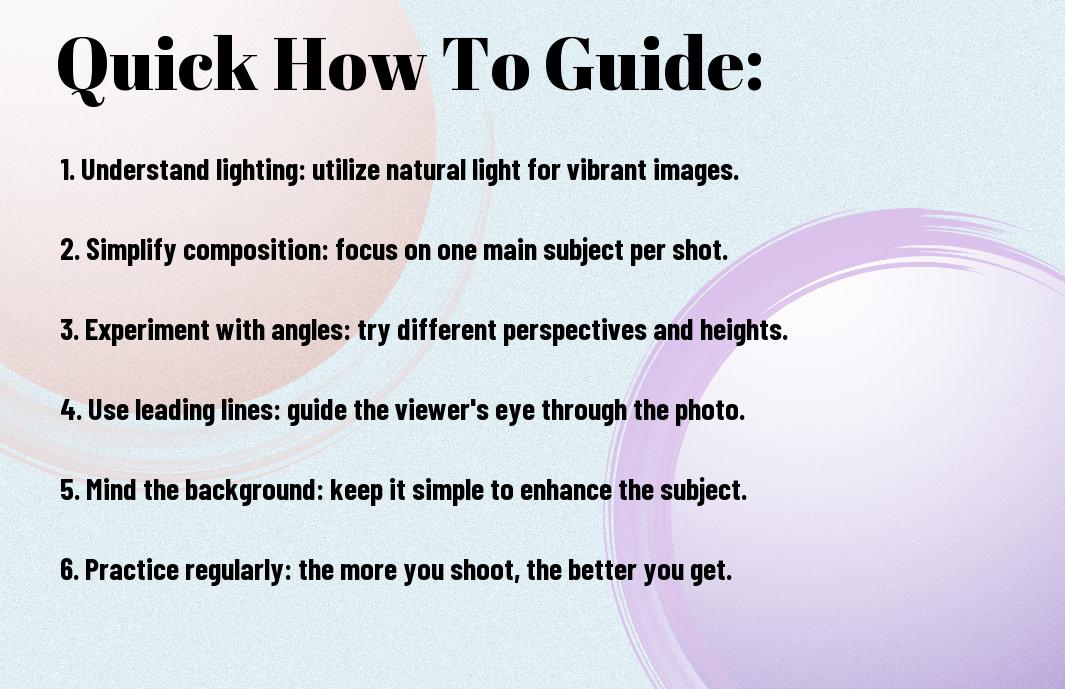
You have the power to capture stunning images that tell a story and evoke emotions. In this guide, you’ll discover imperative tips that will elevate your photography skills, whether you’re using a smartphone or a professional camera. From understanding lighting and composition to honing your editing techniques, you will find practical advice that enhances your creativity. Get ready to explore the art of photography and unlock the beauty of the world around you.
Understanding the Basics of Photography
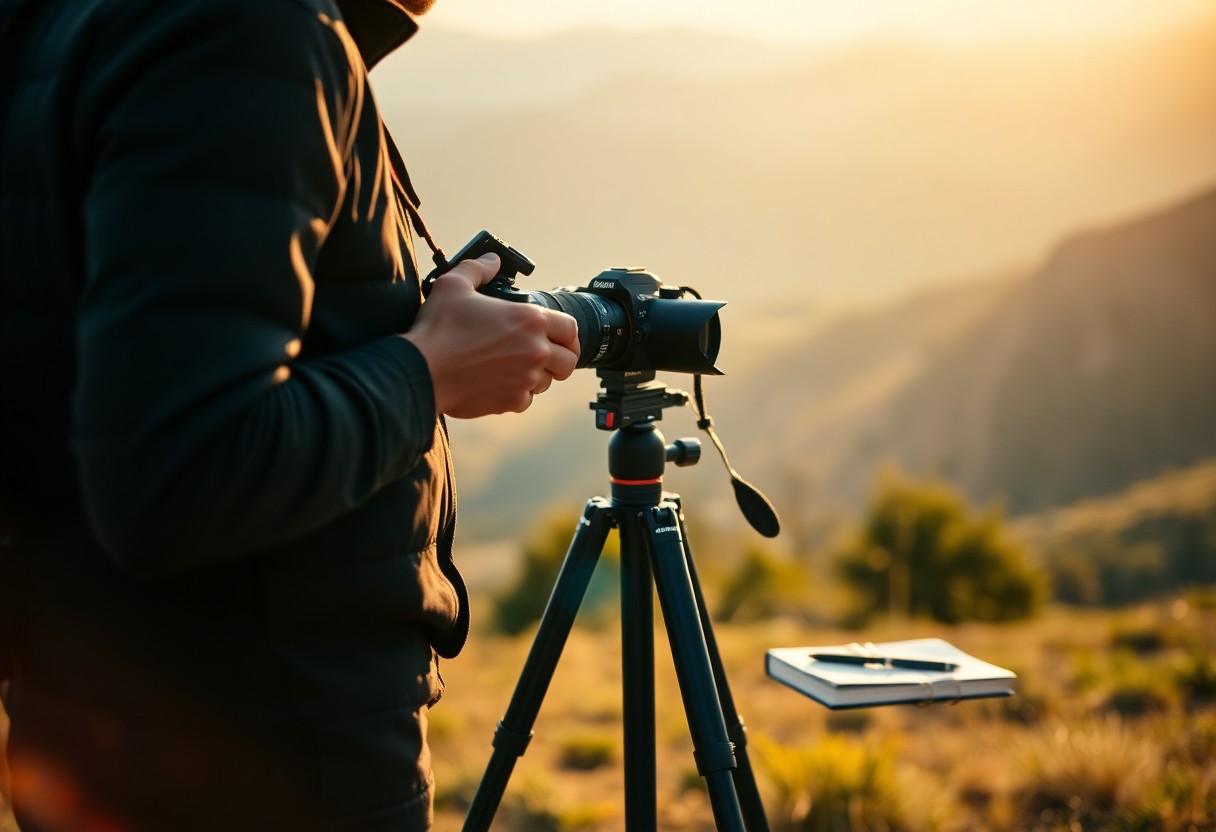
As you launch on your photography journey, understanding the fundamentals is key to capturing stunning images. Photography combines art and science, involving elements like exposure, composition, and lighting that influence the outcome of your shots. Familiarizing yourself with these basics will not only enhance your technical skills but also nurture your creative eye, allowing you to express your unique vision through the lens.
How to Choose the Right Camera
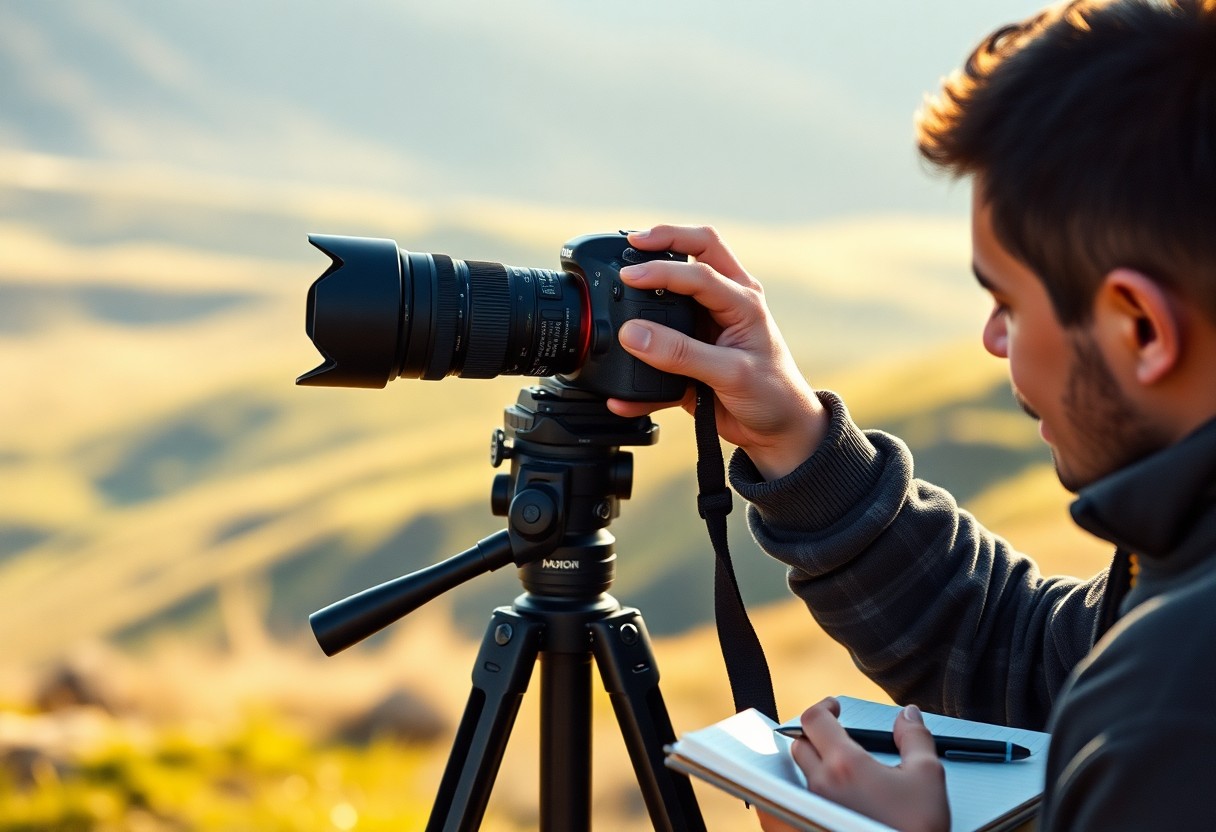
If you’re stepping into the photography world, picking the right camera is important for your success. Consider factors such as your intended use, budget, and desired features. Digital Single-Lens Reflex (DSLR) cameras offer versatility, while mirrorless designs provide compactness and efficiency. Experiment with various models to find one that feels comfortable in your hands and meets your specific needs.
Tips for Selecting Ideal Lenses
While selecting the perfect lenses can significantly enhance your photography, you should take into account the type of photography you aim to pursue. Different lenses serve various purposes, from wide-angle lenses for landscapes to macro lenses for detailed close-ups. Key considerations when choosing lenses include:
- Focal length and its impact on composition
- Maximum aperture for light and depth of field control
- Compatibility with your camera body
Assume that understanding these aspects will help you make informed decisions that suit your photographic style.
To deepen your knowledge on lens selection, prioritize the focal lengths that align with your creative vision. For instance, a 50mm lens is fantastic for portraits, while a 24mm lens excels at landscapes. Consider factors such as:
- Lens type: prime vs. zoom
- Stabilization features for sharper images
- Build quality and weather resistance for durability
Assume that investing time in understanding these attributes will lead you to lenses that elevate your craft and broaden your photographic capabilities.
Mastering Composition Techniques
It is crucial to understand composition techniques to elevate your photography. By mastering these techniques, you can create more stunning, balanced, and visually appealing images that draw the viewer’s attention and tell an engaging story through your lens.
How-to Utilize the Rule of Thirds
For a simple yet effective framing technique, use the Rule of Thirds. This guideline suggests dividing your image into a 3×3 grid, placing your focal point along the intersections or lines. Positioning your subject this way will create more dynamic and interesting compositions.
Tips for Framing and Leading Lines
Clearly, framing and leading lines are powerful compositional elements that guide your viewer’s gaze throughout the image. By utilizing natural frames and lines, you can direct attention to your subject while adding depth. Here are some tips to enhance your compositions:
- Consider using tree branches, windows, or doorways to frame your focal point.
- Incorporate roads, paths, or rivers as leading lines to draw the eye inward.
- Experiment with angles to create a more dramatic effect.
This approach will not only highlight your subject but also offer a sense of context within the frame.
Tips for framing and leading lines can elevate your photography by creating visual pathways. By using your environment consciously, you can enhance composition and establish a connection with your subject. Consider:
- Paying attention to natural elements that can guide your viewer.
- Adjusting your position to find frames that suit your scene.
- Keeping geometry in mind for more organized compositions.
This technique will encourage viewers to explore the entirety of your photograph, making it a more immersive experience.
Lighting Considerations
After mastering the basics of composition, understanding lighting will elevate your photography to new heights. Proper lighting can dramatically alter the mood, texture, and depth of your images. Whether you’re shooting indoors or outdoors, recognizing how light interacts with your subject is crucial to creating stunning visuals. Take the time to experiment with different lighting conditions and learn how to control them for the best results.
How-to Use Natural Light Effectively
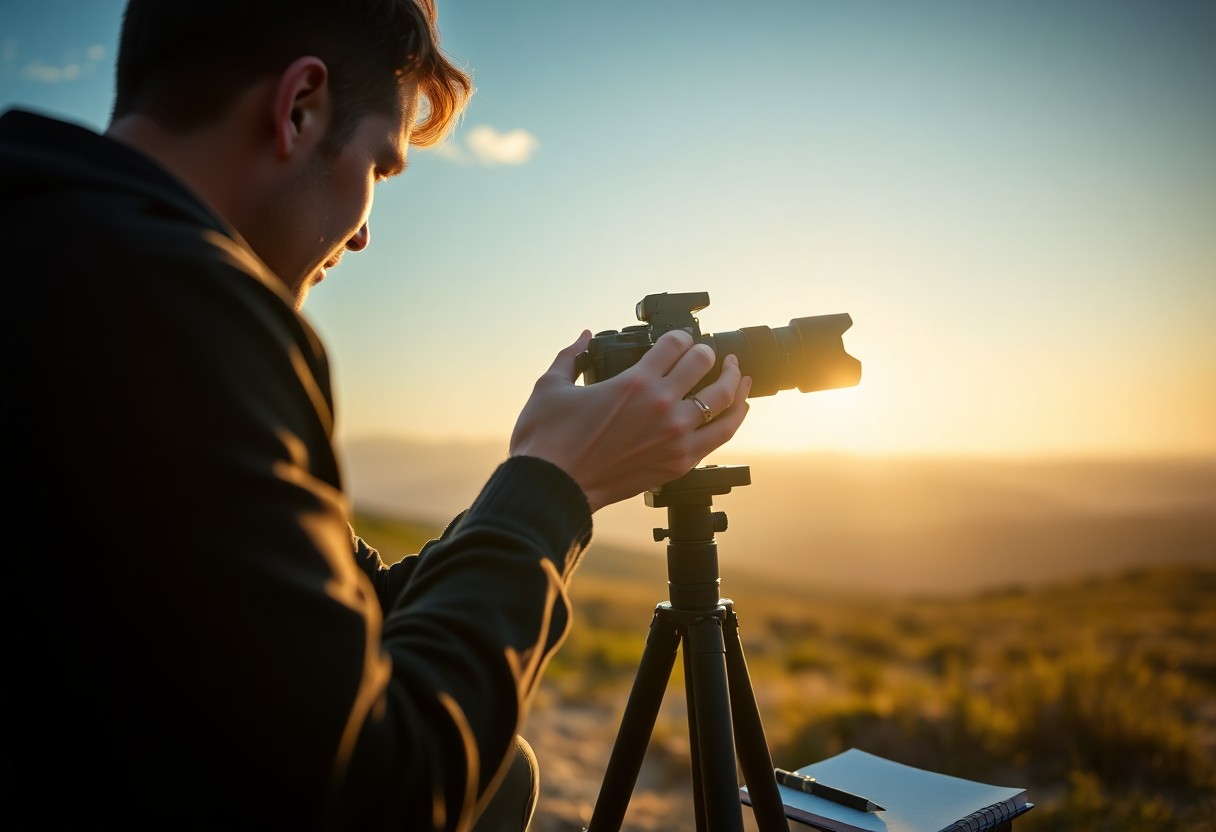
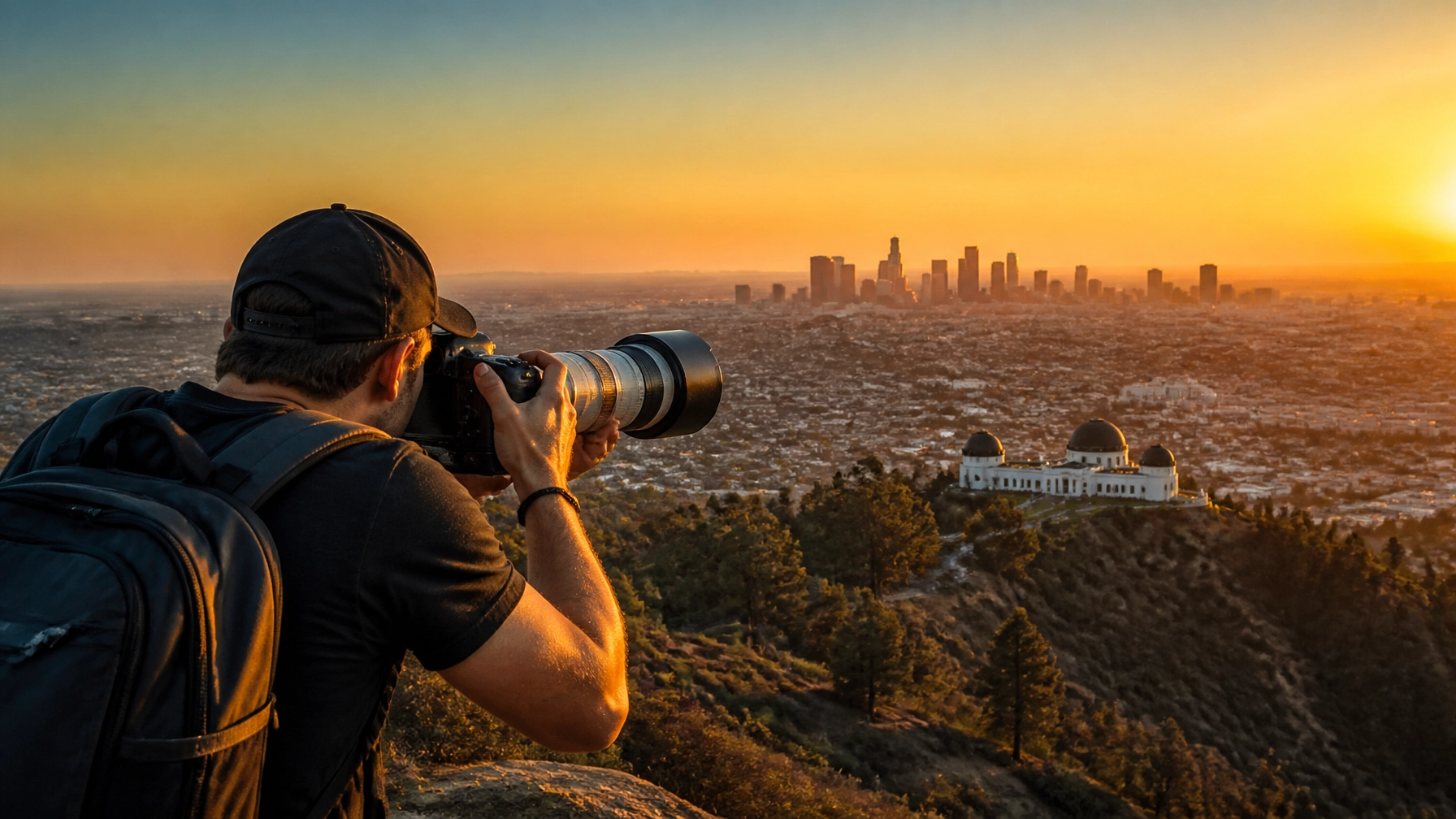
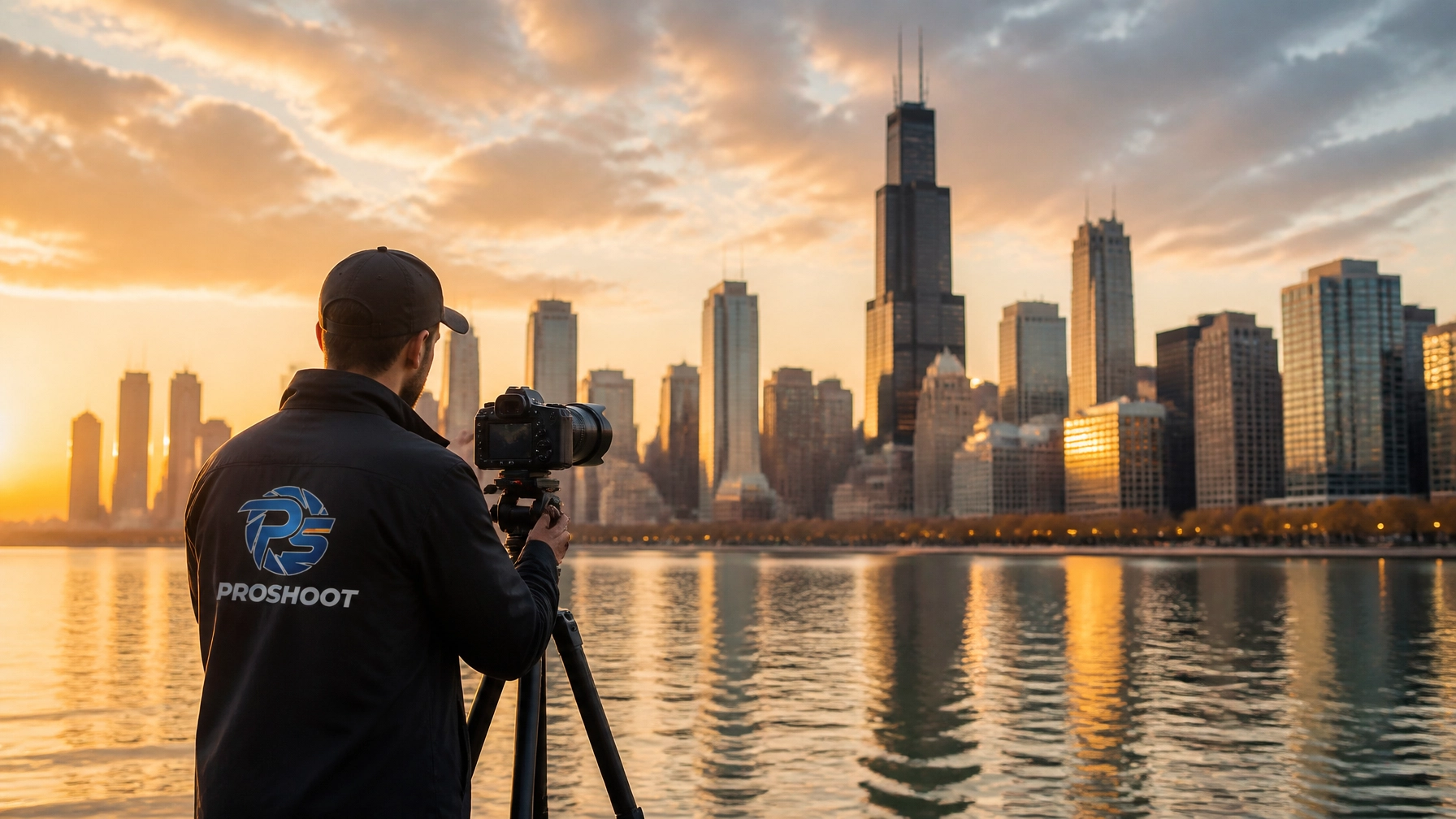
Lighting in photography is not just about brightening your subject; it’s about creating atmosphere and depth. Utilize the golden hours—early morning or late afternoon—when the sun casts a softer glow. Position your subject with the light behind them to create silhouettes, or in front to highlight details. You may also use reflectors to bounce natural light back onto your subject for more dynamic shots.
Tips for Artificial Lighting Setup
While natural light has its charm, mastering artificial lighting can open up a world of creative possibilities. Consider these tips for an effective setup:
- Use a softbox to diffuse harsh light and soften shadows.
- Experiment with adjustable lights to find the right intensity.
- Incorporate multiple light sources to create depth and interest.
- Position lights at varying angles for dramatic effects.
Assume that every light source has its unique attributes, and knowing how they interact with your subject can change the tone of your photos.
This understanding can significantly impact your results and the overall look of your images. In addition to the previous points, keep these additional tips in mind:
- Balance your light sources to avoid overly warm or cool tones.
- Consider using gels on lights to create mood and color effects.
- Invest in a light meter to ensure proper exposure in different setups.
Assume that with practice, you’ll develop a keen sense of how to manipulate artificial lights to enhance the storytelling in your photography.
Camera Settings and Adjustments
Once again, mastering your camera settings is key to capturing beautiful photos. Understanding how to adjust settings such as aperture, shutter speed, and ISO allows you to take control over your images. Experimenting with these parameters in different lighting conditions can elevate your photography skills. Taking the time to familiarize yourself with these settings will enable you to create the aesthetic you desire, making your photography more impactful.
How to Adjust Aperture, Shutter Speed, and ISO
Any time you adjust your aperture, shutter speed, or ISO, you significantly influence your photo’s depth of field, motion blur, and noise levels. Start with aperture to control the amount of light entering the lens and the background blur. Then, adjust shutter speed to freeze action or create motion blur. Finally, set your ISO to manage light sensitivity. With practice, you’ll find the right combinations that enhance your unique style.
Tips for Achieving Proper Exposure
Exposure is crucial in photography, as it determines how light or dark your images appear. Achieving the right exposure involves balancing aperture, shutter speed, and ISO. Here are some tips to guide you:
- Use the histogram feature on your camera to check exposure levels.
- Take test shots and adjust settings accordingly based on your initial results.
- Pay attention to your lighting conditions and adapt your settings for optimal results.
Any adjustments you make can have a big effect on your images, so take the time to experiment and learn.
Tips for Mastering Exposure
Tips for proper exposure can dramatically enhance your photography skills. The following guidelines can help you capture images that are neither too bright nor too dark:
- Consider using exposure compensation for tricky lighting scenarios.
- Utilize manual mode to have full control over all exposure settings.
- Experiment with bracketing to capture a range of exposures for the same scene.
Any effort you put into mastering exposure will be reflected in your stunning photographs.
Post-Processing Essentials
Keep in mind that post-processing is an integral part of photography, as it enhances your images and brings your creative vision to life. Knowing how to effectively edit your photos can significantly elevate their quality, helping them stand out in a world filled with visuals. By mastering the necessarys of editing, you can refine your photography skills and produce stunning results that resonate with viewers.
How-to Edit Photos for Enhanced Visuals
Photos come alive after the editing process, turning your raw captures into striking imagery. Start by adjusting brightness, contrast, and saturation to make your photos pop. Crop out unnecessary elements to create a defined composition, and consider applying sharpening effects to enhance details. Don’t shy away from color grading to set the mood of your images—subtle adjustments can make a significant difference.
Tips for Basic Photo Editing Software
With a variety of basic photo editing software available, selecting the right one can streamline your editing process and improve your overall workflow. Consider these tips:
- Explore user-friendly options like Adobe Lightroom, GIMP, or Pixlr.
- Utilize presets to apply consistent styles across your images.
- Familiarize yourself with key features, like selective adjustments and filters.
The right software will enhance your editing capability and creativity.
Software selection plays a vital role in achieving your desired editing outcomes. Start with intuitive platforms that cater to beginners, allowing you to focus on learning and exploring editing techniques without feeling overwhelmed. Here are some recommendations:
- Check for tutorials and community support to help you make the most of your chosen platform.
- Prioritize software that offers an array of editing tools, yet remains simple to navigate.
- Experiment with trial versions before committing to a purchase, ensuring it meets your needs.
The right software can pave the way for stunning photo transformations.
Factors Influencing Photography Styles
Your photography style is shaped by various factors that contribute to your unique perspective. Consider the following elements:
- Your environment
- Emotional influences
- Technical skills
- Subject matter
- Cultural background
Knowing how these factors interact can help you refine your artistic voice.
How-to Identify Your Personal Style
On your journey to finding your personal photography style, take time to explore what truly resonates with you. Reflect on your favorite images, both yours and others’, and identify common themes, colors, and subjects that capture your attention.
Tips for Experimenting with Different Genres
With an open mind, step out of your comfort zone and explore various photography genres. Here are some tips to guide your journey:
- Take classes or workshops
- Follow diverse photographers
- Practice regularly in different settings
- Join photography communities
- Analyze your results
Thou may discover hidden talents and preferences in unexpected areas of photography.
Your exploration through various genres can significantly enhance your skills and broaden your perspective. Experimenting allows you to mix styles and create something unique. Consider these strategies:
- Set challenges for yourself
- Collaborate with artists from different fields
- Document your growth
- Embrace mistakes as learning tools
- Keep an open heart and mind
Thou will find your photographic voice in the process of exploration and experimentation.
Summing up
Considering all points, mastering beautiful photography basics requires a blend of technical skills and creative vision. By applying the tips shared, you can enhance your ability to capture stunning images that reflect your unique perspective. Ensure you pay attention to lighting, composition, and your camera settings while experimenting with various techniques. As you practice regularly, you will develop a more intuitive understanding of photography, transforming your passion into art. Enjoy your journey into the captivating world of photography!




Leave a Reply
You must be logged in to post a comment.