

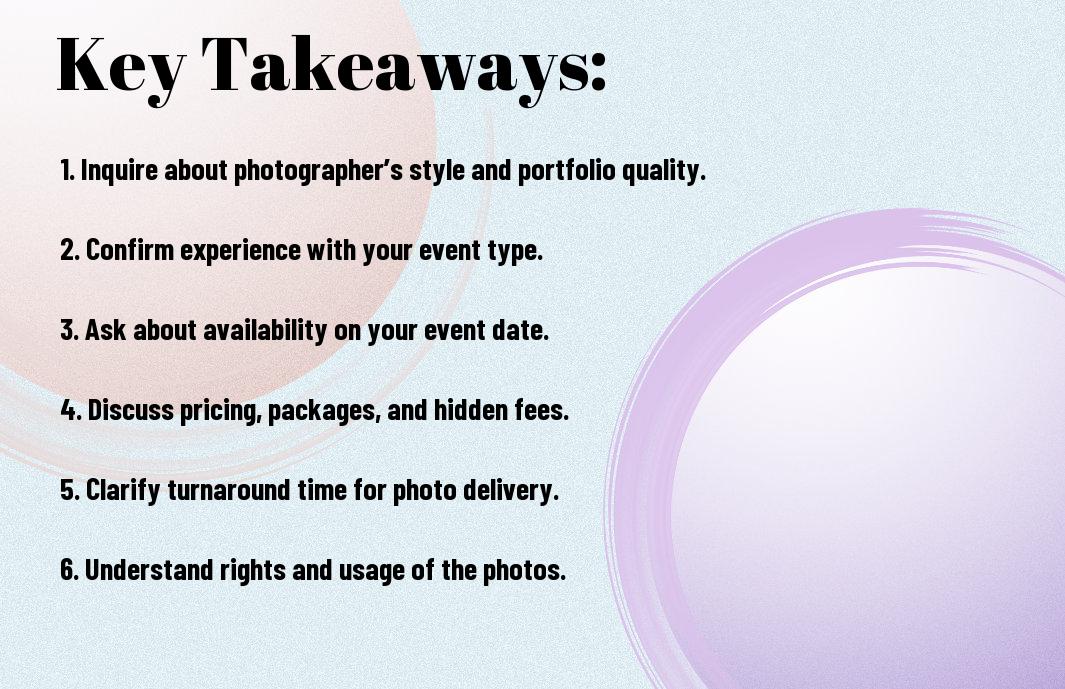
Over the course of your search for the perfect photographer, it’s vital that you arm yourself with the right questions to ensure you make a well-informed decision. Choosing a photographer can greatly impact your memories, whether for a wedding, family portraits, or special events. To help you navigate this process smoothly, we’ve compiled a list of ten necessary questions that will clarify your expectations and guide you towards finding the ideal professional who matches your vision. Let’s dive in and empower your photography selection journey!

Decoding Your Vision: What Style Do You Want?
Understanding the style you envision for your photography is crucial in finding the right photographer. Consider what moods and elements resonate with you, whether it’s bright and airy, dark and moody, or somewhere in between. Identifying your preferences will not only streamline your search but also ensure that the photographer you choose can effectively capture your desired aesthetic. Take time to browse portfolios and gather inspiration, creating a clear vision you can communicate effectively during consultations.
Defining Your Aesthetic: Personal vs. Professional Tastes
Your aesthetic can often blend personal and professional influences, reflecting your individuality while also serving its intended purpose. When hiring a photographer, think about how your tastes align with your project—whether it’s for personal branding, family portraits, or a corporate event. Balancing these elements will help you articulate your vision more clearly and ensure that the final images resonate with your intended audience.
Exploring Genres: From Portraits to Event Photography
Different photography genres serve various purposes and capture distinctive moments, so it’s crucial to explore what aligns best with your vision. Whether you’re considering portraits, lifestyle shots, product photography, or event coverage, each genre possesses unique styles, techniques, and emotional expressions. Knowing which type of photography you prefer will guide you in selecting a photographer with the right expertise and approach.
When exploring genres, consider what specific aspects of each one appeal to you. Portraits can range from candid and relaxed to highly stylized and posed, while event photography might focus on capturing spontaneous moments or meticulously planned details. Research the photographers’ portfolios to see how they interpret these genres and think about your objectives. For instance, if you’re planning a wedding, you may desire a blend of documentary-style and creative portraiture, while a corporate shoot may call for clean, professional images that highlight your branding. Understanding these nuances can make a significant difference in the outcome of your photography project.
The Value Equation: What’s Your Budget?
When hiring a photographer, understanding your budget is vital to finding a professional who meets your needs without compromising on quality. By determining what you can reasonably spend, you can effectively narrow down your options and prevent any financial strain. Photography can vary significantly in price, so it’s important to establish a budget upfront to guide your decision-making process while ensuring that you receive value for your investment.
Understanding Pricing Structures: Hourly Rates vs. Packages
Photographers often offer different pricing structures, including hourly rates and package deals. Hourly rates typically apply to shorter sessions, while packages may include a set number of hours, prints, and digital images. Understanding these structures allows you to choose a service that aligns with your specific requirements and budget constraints, ultimately leading to a more informed decision.
Negotiating for Quality: Balancing Cost with Expertise
Finding a balance between cost and expertise is important when hiring a photographer. While sticking to your budget, it’s important to consider the level of skill and experience a professional brings. Cheaper options may seem appealing, but compromising on quality can affect the final result. Instead, focus on negotiating terms that maintain a high standard of work while remaining mindful of your financial limits.
When negotiating quality with photographers, ensure that you communicate your vision and budget openly. Discuss what elements of the shoot are most important to you and see where there might be flexibility within their offerings. Some photographers may be willing to customize packages or offer a discount for fewer hours if it aligns with their schedule. Establishing a good rapport can lead to mutually beneficial arrangements that cater to your needs and respect their expertise.

Portfolio Scrutiny: What Should You Look For?
When assessing a photographer’s portfolio, look for diversity in their work while ensuring a consistent quality throughout. Pay attention to the themes and subjects that resonate with you, as this will give you insight into their creative vision. Evaluate the composition, lighting, and the overall emotional impact of their photos. A strong portfolio should also showcase their ability to adapt to different environments and styles, aligning well with your specific needs.
Recognizing Signature Styles: Cohesion in a Photographer’s Work
In a photographer’s portfolio, observe the cohesion and signature style that reflects their unique artistic voice. Consistency in color palette, composition, and subject matter indicates their expertise and passion. This signature style should resonate with your personal taste or content goals, ensuring that the final product aligns with your vision.
Evaluating Client Testimonials: Trustworthiness and Reputation
Client testimonials serve as a window into a photographer’s reliability and professionalism. Look for reviews that highlight not just the quality of the work but also aspects like communication, punctuality, and the overall experience. Positive feedback from previous clients can significantly bolster your confidence in making the right choice.
When reading client testimonials, focus on specific details that reveal the photographer’s strengths. Look for consistent praise regarding their creativity, engagement during the shoot, and how well they understood clients’ needs. Testimonials that mention positive outcomes, such as satisfaction with the final images or the ease of collaboration, indicate a photographer’s capability in delivering high-quality service. Trustworthy feedback leads to informed decisions, helping you choose a photographer who will meet your expectations and enhance your photography experience.

Technical Proficiency: What Gear Do They Use?
When hiring a photographer, it’s important to inquire about the equipment they use. A skilled photographer will utilize professional-grade cameras, lenses, and accessories that reflect their technical proficiency. Understanding their gear can offer insights into their creative capabilities and the quality of images you can expect. Don’t hesitate to ask about specific brands or types of equipment that they favor to ensure their style aligns with your vision.
The Importance of Camera Equipment in Quality Output
The quality of the camera equipment directly impacts the final images you receive. High-end cameras and lenses produce sharper, more vibrant images, while also allowing for more creative options in various environments. By asking about the gear, you can gauge the photographer’s commitment to delivering professional results that match your expectations.
Understanding Lighting and Setup Techniques
A photographer’s understanding of lighting and setup techniques is necessary for achieving remarkable images. Good lighting can elevate a photograph, enhancing textures and colors that bring your visuals to life. Inquire about how they approach different lighting scenarios, both natural and artificial, as well as their preferred setups. This knowledge will ensure that your event or portrait is captured in the best possible light, providing you a timeless and captivating visual story.
Lighting techniques include the use of natural light, reflectors, diffusers, and artificial sources to create mood and highlight subjects effectively. A proficient photographer will assess the environment and adjust their setup accordingly to maximize the impact of light. Whether shooting in direct sunlight or low-light conditions, their ability to manipulate lighting can profoundly affect the composition. Understanding how your photographer plans to utilize these techniques will help ensure your images are not just visually appealing but also convey the intended emotion and quality.
Logistics in Focus: How Do They Handle Arrangements?
When hiring a photographer, it’s imperative to understand how they manage arrangements for your shoot. This includes the process for securing a location, coordinating with venues, and any additional assistance they might provide, such as obtaining permits. Knowing their approach to logistics ensures seamless communication and helps align expectations for a successful photography experience.
Availability and Scheduling: Aligning Calendars
Before finalizing your photographer choice, confirming their availability is key. Discuss preferred dates and times for your shoot and inquire about their scheduling process. This not only helps synchronize calendars but also ensures that your desired photographer can dedicate the necessary time and attention to your project.
Understanding Travel Policies and Additional Costs
When hiring a photographer, it’s important to be aware of their travel policies and any potential extra costs involved. Many photographers may include travel fees based on distance or specific locations, which can impact your overall budget. Always ask about these policies upfront to avoid any surprises on the day of your shoot.
Understanding travel policies and additional costs is vital for your budget planning. Some photographers may charge extra for locations beyond a certain distance, while others might have a flat rate for travel. Clarifying these details ensures that you are prepared for any fees associated with your chosen venue. Discuss the specifics of your location with your photographer to determine if there are any potential costs or logistical challenges you need to consider ahead of time.
Collaboration Dynamics: How Do They Engage with Clients?
Understanding a photographer’s collaboration dynamics is vital for a successful partnership. You want to work with someone who values your input and fosters a comfortable atmosphere for your ideas. An engaged photographer will not only listen to your vision but actively contribute their expertise, ensuring a harmonious working relationship as you create memorable images together.
Communication Styles: Ensuring Clear Expectations
Effective communication sets the foundation for your project. You should determine how the photographer expresses their ideas and how they handle feedback. A clear and open dialogue helps you align your vision with theirs, ensuring everyone is on the same page from the beginning to the end of your photography experience.
Flexibility and Adaptability: Handling Last-Minute Changes
Life is unpredictable, and schedules can shift unexpectedly. You should evaluate how adaptable your photographer is to changes that may arise. Their willingness to accommodate modifications not only demonstrates professionalism but also shows they genuinely care about capturing your moments authentically, regardless of unforeseen circumstances.
When discussing flexibility, inquire how photographers handle last-minute requests or changes in schedule. A skilled photographer should have contingency plans and the ability to pivot smoothly to ensure that your vision is still met. Whether it’s changing locations due to weather or adjusting timelines for unforeseen events, their adaptability can significantly impact the quality of your photography experience. This level of responsiveness indicates a commitment to both your satisfaction and the successful capture of your special moments.
Conclusion
On the whole, asking the right questions before hiring a photographer can make a significant difference in ensuring that you find the perfect match for your needs. By considering aspects like their experience, style, availability, and pricing, you empower yourself to make a well-informed decision. Taking the time to engage with potential photographers allows you to assess their compatibility with your vision and expectations, ultimately leading to a more satisfying photography experience that captures your most cherished moments.




Leave a Reply
You must be logged in to post a comment.