
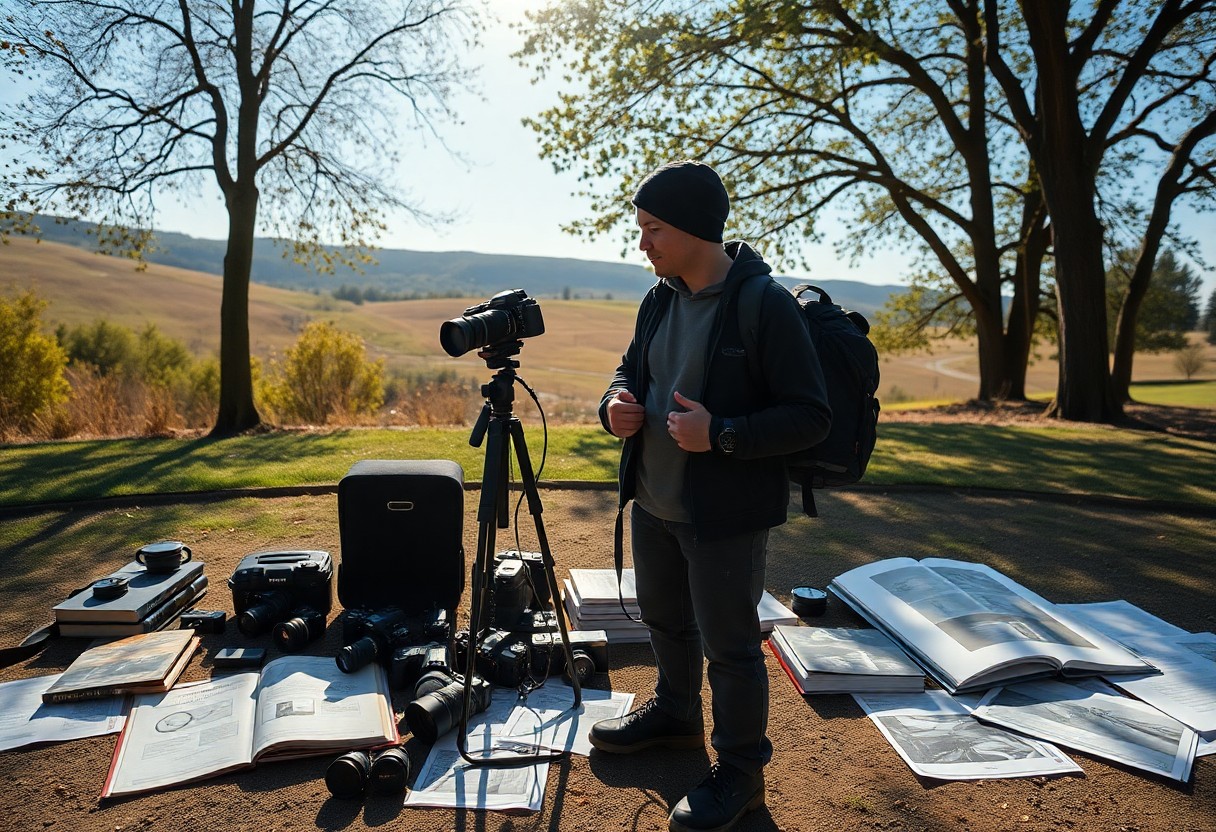
As a novice, you may find the art of composition in photography daunting, filled with complex rules and guidelines. However, breaking down these intricacies can significantly enhance your photographic skills and help you capture stunning images. This post will guide you through fundamental concepts, tools, and techniques that will enable you to develop a keen eye for composition. By understanding and implementing these crucials, you will elevate your photography from basic snapshots to visually compelling works of art.
Framing the Perfect Shot: The Rule of Thirds Demystified
Utilizing the Rule of Thirds can transform your photography, making compositions more dynamic and engaging. By dividing your frame into a grid of nine equal sections, you can position key elements along the gridlines or at their intersections. This technique guides the viewer’s eye and creates a more balanced scene, particularly advantageous in landscapes, portraits, and action shots. By consciously applying this rule, you’ll elevate your compositions from ordinary to visually captivating.
Breaking Down the Grids: Understanding Layouts
Understanding the layout of the Rule of Thirds starts with visualizing a grid over your image. Imagine two horizontal lines and two vertical lines intersecting, separating your frame into nine equal parts. Key subjects should align with these lines or intersections, creating a natural focal point. This method fosters balance, emphasizing important elements and ensuring that your shots maintain viewers’ interest without overcrowding the frame.
Beyond the Basics: Creative Variations on the Rule
Exploring beyond the Rule of Thirds opens a realm of creative possibilities. You might choose to violate the rule for a more dramatic effect, intentionally centering your subject to convey symmetry or power. Alternatively, experiment with leading lines or framing elements that direct attention toward your focal points. Abstract compositions, such as those based on color balance or minimalist designs, can also provide fresh perspectives, enabling you to express your artistic vision uniquely.
By pushing the boundaries of the Rule of Thirds, you can cultivate a wider range of compositions that reflect your storytelling style. For example, using symmetry can create striking images, while off-center placements might enhance the narrative’s tension or evoke emotion. Incorporating dynamic angles or unique perspectives can further amplify your images’ impact. As you gain confidence, allow intuition and experimentation to guide your creative process, fostering a personal style that sets your photography apart.
Mastering Light: How Natural and Artificial Sources Transform Images
Understanding light is necessary in photography as it shapes how your subject appears and can evoke emotion. Natural light, which shifts throughout the day, provides unique opportunities for capturing ethereal colors and textures, while artificial light allows for greater control over your environment. Combining both elements opens doors for creative possibilities and dynamic images that draw viewers in.
The Golden Hour: Harnessing Time for Dynamic Effects
The golden hour, shortly after sunrise and before sunset, is celebrated for its warm, soft lighting that enhances skin tones and landscapes alike. During this time, shadows soften and colors blend, creating breathtaking scenes. Plan your shoots around these hours to elevate the quality of your images significantly, capturing moments that resonate with viewers through their enchanting ambiance.
Playing with Shadows: Using Contrast to Your Advantage
Shadows can be powerful visual elements in your photographs, adding depth and intrigue. By experimenting with different angles and light sources, you can create electric contrasts that draw attention to your subject while providing a dramatic effect. Use shadows to your advantage as they can enhance mood, leading to striking and emotive imagery.
Utilizing shadows effectively requires a keen eye and a willingness to explore. For instance, when shooting in harsh sunlight, rather than avoiding the shadows, embrace them. Position your subject so that the shadows fall across their face or body, creating a sense of mystery. Additionally, play with light sources – placing a light behind your subject can create stark silhouettes that emphasize shape and form. The interplay of light and dark can transform an ordinary shot into a visually compelling story, allowing the viewer to engage with your image on a deeper level.
Composition Techniques that Elevate Any Photo
Mastering composition techniques can significantly enhance the appeal of your images. By implementing a few fundamental principles, you can guide your viewer’s gaze, create harmony in your scene, and ultimately produce captivating photographs. Exploring techniques like leading lines, symmetry, and balance can make your shots not only visually striking but also more impactful, capturing the true essence of your subject.
Leading Lines: Drawing the Eye Effectively
Leading lines serve as powerful visual pathways that draw the viewer’s eye toward your main subject. Roads, rivers, fences, or any linear elements in your frame guide attention, creating a sense of depth and perspective. By strategically placing leading lines in your composition, you can lead the viewer through the image, making their experience more immersive and engaging.
Symmetry and Balance: Creating Visually Pleasing Compositions
Employing symmetry and balance enhances the aesthetic appeal of your photographs by creating a sense of order and harmony. Compositions featuring symmetrical elements invoke a feeling of stability, drawing the viewer in with their pleasing arrangement. Aim to position subjects along a symmetrical axis or mirror elements, which can result in striking images that leave a lasting impression.
Symmetry can be observed in architecture, nature, or even in human-made objects; for example, capturing a perfectly reflected landscape in still water or a well-proportioned building can yield spectacular compositions. Balance doesn’t have to rely solely on symmetry, as you can create visual equilibrium through the careful placement of different elements of varying weight. For instance, placing a bold object on one side of the frame can be counterweighted with a softer element on the opposite side. This equilibrium creates a harmonious image that feels stable without sacrificing interest. An understanding of symmetry and balance opens up creative opportunities, allowing you to develop a signature style tailored to your vision.
Experimenting with Perspective: Positioning for Impact
Perspective can dramatically alter the story your photograph tells. By shifting your position and changing your viewpoint, you can create stunning compositions that capture attention and evoke emotions. Delve into various angles, orientations, and distances to discover the unique perspectives your subject can offer. Exploring these options encourages creativity and deepens your understanding of composition, allowing your images to resonate with viewers in unexpected ways.
Low and High Angles: Seeing the World from New Heights
Utilizing low and high angles introduces fresh viewpoints that can transform ordinary scenes into extraordinary photographs. Shooting from a low angle not only emphasizes your subject’s stature but also creates a sense of grandeur. Conversely, a high angle can reveal patterns or the spatial relationships within a scene, providing a broader context that might otherwise remain hidden. By experimenting with both extremes, you invite viewers to see the world through a different lens.
The Importance of Depth: Layers that Tell a Story
Incorporating depth into your compositions infuses them with life and dimension. Layering elements can guide the viewer’s eye and enhance the emotional impact of your photographs, telling a richer story. By strategically placing foreground, midground, and background elements, you create visual pathways that invite exploration and engagement with your image.
When composing your shots, think critically about how various elements interact within your frame. For instance, include vibrant flowers in the foreground contrasting with a serene landscape in the background, which invites the viewer to examine deeper into your photograph. This layering not only enriches the scene but also adds context and depth, drawing the audience into your narrative. By understanding and utilizing these layers, your photographs become powerful storytelling tools that captivate and connect with your audience on a more profound level.
Common Pitfalls: Errors New Photographers Must Avoid
Embarking on your photography journey comes with its own set of challenges. While experimentation leads to growth, certain common pitfalls can hinder your progress. By recognizing these errors early on, you can refine your skills and create more compelling images. Awareness of these missteps can make a significant difference in the quality of your photographs, enabling you to capture stunning visuals that resonate.
Overcrowding the Frame: Simplicity in Complex Scenes
When faced with a visually rich setting, it’s easy to become enamored with every detail and overcrowd the frame. Simplicity often results in more powerful images. Focus on one central subject that captures the essence of the scene while allowing negative space to breathe life into your composition.
Neglecting the Background: The Silent Partner in Photography
The background is often an overlooked component, yet it significantly influences the overall impact of your images. A cluttered or distracting background can take attention away from your subject, obscuring the message you wish to convey. Take the time to evaluate what lies behind your subject; it should enhance the story rather than detract from it. Experimenting with different depths of field can help isolate your subject, ensuring it stands out against a suitable backdrop.
A well-considered background can elevate an ordinary photograph into something extraordinary. For example, shooting a person against a washed-out or neutral background can draw the viewer’s eye to their expressions and emotions, creating a stronger connection. Conversely, an overly busy or colorful background can create visual chaos, diverting the viewer’s attention. Taking a moment to reposition yourself or adjust your framing can transform the silent partner into a key player in your photography narrative.
Final Words
Summing up, you can demystify the intricacies of composition in photography by practicing the fundamental principles such as the rule of thirds, leading lines, and framing. Engaging in regular photography exercises, analyzing your own work, and studying compositions of renowned photographers will enhance your understanding. Experimenting with different angles and lighting conditions will also allow you to develop a personal style. By continually learning and adapting these elements, you’ll solidify your compositional skills and create more impactful images.






Leave a Reply
You must be logged in to post a comment.